We Use CookiesWe use cookies to enhance the security, performance, functionality and for analytical and promotional activities. By continuing to browse this site you are agreeing to our privacy policy

10 Best Wireless Guitar Systems 2026 in the United States
How do we rank products for you?

Our technology thoroughly searches through the online shopping world, reviewing hundreds of sites. We then process and analyze this information, updating in real-time to bring you the latest top-rated products. This way, you always get the best and most current options available.

headphones-stars

Our Top Picks

#1

Winner

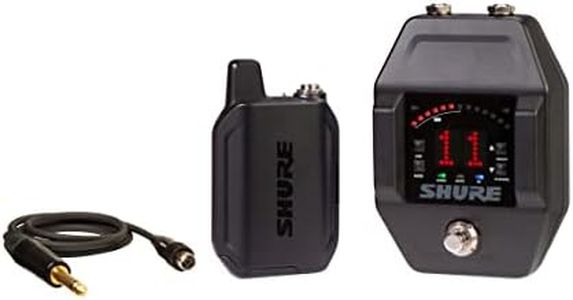
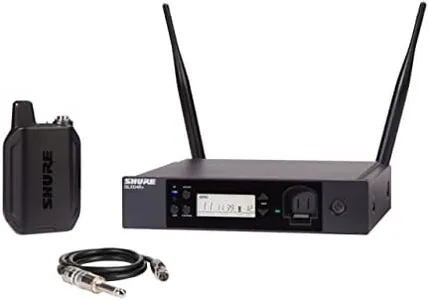
Shure GLXD16+ Dual Band Pro Digital Wireless System with Pedal Receiver for Guitar & Bass - 12-Hour Battery Life, 100 ft Range | Includes WA305 Premium Cable with 1/4" Jack (GLXD16+-Z3)

Rating
10.0
Chosen by1,458
Frequency Range
Range
Latency

Most important from
316 reviews

Frequency Range
Clear sound and easy to use, with modern features like auto scanning and dual-band frequencies.
Range
Reception range is amazing, sufficient for any standard stage setup.
Latency
Reliable with no latency and great sound quality, even in environments full of other wireless signals.
Audio Quality
Sound quality is uncompromised, especially important for bass players who need a reliable frequency response.
Build Quality
Devices feel like they were built from weapons-grade titanium—heavy, solid, and designed to withstand stage rigors.

The Shure GLXD16+ Dual Band Pro Digital Wireless System is designed for guitarists and bassists seeking reliable, high-quality wireless audio. One of its standout features is the dual-band technology, which operates on both 2.4 and 5.8GHz frequencies. This allows for better signal stability and less interference, ensuring a clearer sound during performances. The system boasts a generous 100 ft range and an impressive battery life of 12 hours, which is perfect for long gigs or practice sessions. Users will appreciate the quick charging feature, which gives 1.5 hours of use after just 15 minutes of charging.

Setting up the system is straightforward, as the transmitters and receivers pair automatically, making it ideal for musicians who want to focus on their performance rather than technical hassles. The included pedal receiver is rugged and fits well into pedalboards, adding convenience for guitarists.

However, there are some drawbacks to consider. While the GLXD16+ supports multiple setup options, it may not offer backward compatibility with older models, which could be an issue for those looking to upgrade from previous generations. Additionally, its license-free frequency range means ease of use, but users in crowded environments might still experience occasional dropouts, despite its advanced interference management. In terms of build quality, it is solid and designed for live performance, but the weight may be a consideration for musicians looking for lightweight solutions. The audio quality is generally excellent, making it a reliable choice for both practice and professional gigs.

This system is best suited for committed musicians who require dependable performance and sound quality in their setups. If you're looking for a wireless system that minimizes interference and is easy to use, the Shure GLXD16+ could be a great addition to your gear.

Rating
10.0
Chosen by1,458
Frequency Range
Range
Latency

Most important from
316 reviews

Frequency Range
Clear sound and easy to use, with modern features like auto scanning and dual-band frequencies.
Range
Reception range is amazing, sufficient for any standard stage setup.
Latency
Reliable with no latency and great sound quality, even in environments full of other wireless signals.
Audio Quality
Sound quality is uncompromised, especially important for bass players who need a reliable frequency response.
Build Quality
Devices feel like they were built from weapons-grade titanium—heavy, solid, and designed to withstand stage rigors.
#2

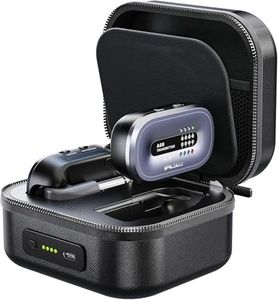
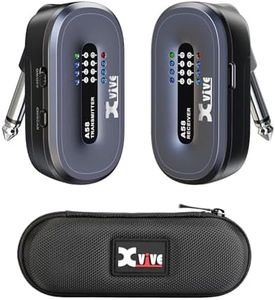
Xvive AC58 Wireless Guitar System 5.8GHz, A58 Guitar Wireless System with Charging Case for Active or Passive Pickup Electric/Acoustic Bass Guitar

Rating
9.1
Frequency Range
Range
Battery Life

Most important from
38 reviews

Frequency Range
Operating on 5.8 GHz truly avoids Wi-Fi interference, unlike lower-frequency systems, ensuring a stable and clean wireless connection.
Range
The system performs flawlessly across various venues, from large concert stages to intimate clubs, with no interference even in environments where wireless issues are common.
Battery Life
Battery life comfortably covers gigs lasting around five hours, providing ample playtime without frequent recharging concerns.
Latency
Sound quality remains pristine with no noticeable signal latency or loss, preserving the full tonal range including low-end frequencies.
Audio Quality
Sound quality remains pristine with no noticeable signal latency or loss, preserving the full tonal range including low-end frequencies.
Channels
Switchable channels and an automatic channel scan mode make finding the best interference-free frequency straightforward and hassle-free.

The Xvive AC58 Wireless Guitar System is a solid choice for guitarists looking for a reliable wireless setup. It operates on a 5.8 GHz frequency with true diversity technology, which helps avoid interference from other wireless devices—a useful feature for both stage and home use. The system supports a wide audio frequency range (20Hz to 20kHz) with high-resolution 24-bit/48kHz sound, ensuring your guitar tone stays clear and natural without noticeable degradation. One standout feature is its compatibility with both active and passive pickups, making it versatile for most electric and acoustic bass guitars. Switching between these modes is simple, which is great if you have a high-output active pickup that can otherwise cause distortion.

The included charging case is convenient, offering up to two full charges, so you don’t have to worry about battery life during long gigs. The batteries are lithium-ion and recharge via USB-C, which is a modern and accessible charging method. The system has a channel scan mode to automatically find the best wireless channel, reducing hassle and potential dropouts. The compact and lightweight build (about 3.2 ounces) makes it easy to carry around.

This system covers the essentials with a straightforward setup and good audio quality, making it suitable for most casual to semi-professional players.

Rating
9.1
Frequency Range
Range
Battery Life

Most important from
38 reviews

Frequency Range
Operating on 5.8 GHz truly avoids Wi-Fi interference, unlike lower-frequency systems, ensuring a stable and clean wireless connection.
Range
The system performs flawlessly across various venues, from large concert stages to intimate clubs, with no interference even in environments where wireless issues are common.
Battery Life
Battery life comfortably covers gigs lasting around five hours, providing ample playtime without frequent recharging concerns.
Latency
Sound quality remains pristine with no noticeable signal latency or loss, preserving the full tonal range including low-end frequencies.
Audio Quality
Sound quality remains pristine with no noticeable signal latency or loss, preserving the full tonal range including low-end frequencies.
Channels
Switchable channels and an automatic channel scan mode make finding the best interference-free frequency straightforward and hassle-free.
#3

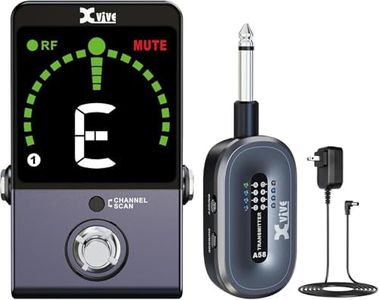
Xvive P58 Wireless Guitar Pedal System 5.8GHz Wireless Guitar Transmitter and Chromatic tuner Pedal Receiver for Active or Passive Pickup Bass Guitar Piezo-Electric Acoustic Guitar

Rating
8.5
Latency
Frequency Range
Channels

Most important from
22 reviews

Latency
The system delivers clear sound with practically no delay, making it ideal for live performance without any noticeable audio lag.
Frequency Range
Its 5.8 GHz frequency band ensures a reliable connection with zero dropouts, even in congested environments and across various venues.
Channels
The auto channel select feature simplifies setup and helps avoid interference, enhancing the overall user experience.
Battery Life
Battery life is impressive and charging is convenient with the included cable that charges both units simultaneously.
Audio Quality
The wireless system maintains the natural tone of the instrument without any degradation or unwanted high-pitched noise.
Build Quality
Compact and lightweight design makes it easy to carry and perfect for gigging musicians who need freedom of movement.

The Xvive P58 Wireless Guitar Pedal System uses a 5.8 GHz true diversity wireless signal, providing a reliable connection with minimal interference. It supports a range of up to 100 feet, which is plenty for most stage or home use. The audio quality is strong, with high-resolution 24-bit/48kHz sound that covers the full guitar frequency range (20Hz to 20kHz), ensuring your tone stays clear and natural. This system is versatile because it works with both active and passive pickups, so you can use it with electric, bass, or acoustic guitars without issue.

The latency is low enough to avoid any noticeable audio delay, which is important for live performance. It also features multiple channels and an automatic channel scan mode, helping you find the best wireless frequency quickly and preventing interference from other devices. The built-in chromatic tuner on the receiver pedal adds convenience for tuning on the fly, and you can choose between buffer or true bypass modes depending on your setup needs.

Battery life is decent thanks to the included rechargeable lithium-ion battery, and the compact design is lightweight and easy to carry. Some users might find the initial channel setup a bit technical, but the clear LEDs and instructions simplify this process. For gigging musicians who need freedom of movement and reliable performance, the Xvive P58 offers a strong balance of audio quality, dependable range, and ease of use.

Rating
8.5
Latency
Frequency Range
Channels

Most important from
22 reviews

Latency
The system delivers clear sound with practically no delay, making it ideal for live performance without any noticeable audio lag.
Frequency Range
Its 5.8 GHz frequency band ensures a reliable connection with zero dropouts, even in congested environments and across various venues.
Channels
The auto channel select feature simplifies setup and helps avoid interference, enhancing the overall user experience.
Battery Life
Battery life is impressive and charging is convenient with the included cable that charges both units simultaneously.
Audio Quality
The wireless system maintains the natural tone of the instrument without any degradation or unwanted high-pitched noise.
Build Quality
Compact and lightweight design makes it easy to carry and perfect for gigging musicians who need freedom of movement.

Buying Guide for the Best Wireless Guitar Systems

Choosing the right wireless guitar system can greatly enhance your performance by providing freedom of movement and eliminating the hassle of cables. When selecting a wireless guitar system, it's important to consider several key specifications to ensure you get the best fit for your needs. Understanding these specs will help you make an informed decision and find a system that matches your playing style and performance requirements.
Frequency RangeThe frequency range of a wireless guitar system refers to the range of radio frequencies it uses to transmit the signal from your guitar to the receiver. This spec is important because it affects the system's ability to avoid interference from other wireless devices. Systems typically operate in UHF (Ultra High Frequency) or VHF (Very High Frequency) bands. UHF systems are generally preferred for their better range and less susceptibility to interference. If you play in environments with many wireless devices, a UHF system might be the best choice.
RangeThe range of a wireless guitar system indicates the maximum distance between the transmitter and receiver while maintaining a clear signal. This is crucial for performers who move around a lot on stage or play in large venues. Ranges can vary from around 50 feet to over 300 feet. For small venues or home use, a shorter range may suffice, but for larger stages or outdoor performances, a longer range is essential to ensure uninterrupted signal transmission.
Battery LifeBattery life refers to how long the transmitter and receiver can operate on a single charge or set of batteries. This is important for ensuring that your system doesn't die in the middle of a performance. Battery life can range from a few hours to over 10 hours. If you play long gigs or don't want to worry about frequent recharging, look for systems with longer battery life. Rechargeable systems can be convenient, but make sure they offer enough playtime for your needs.
LatencyLatency is the delay between when you play a note on your guitar and when the sound is heard through the amplifier. Low latency is crucial for maintaining the timing and feel of your performance. Most modern wireless systems have very low latency, often under 5 milliseconds, which is generally imperceptible. If you are highly sensitive to timing or play fast, intricate music, ensure the system you choose has minimal latency.
Audio QualityAudio quality refers to the clarity and fidelity of the sound transmitted by the wireless system. This is important for ensuring that your guitar's tone is accurately reproduced without distortion or loss of detail. Look for systems that offer a wide frequency response and high signal-to-noise ratio. If you play genres that rely heavily on tone quality, such as jazz or classical, prioritize systems known for their superior audio quality.
ChannelsChannels refer to the number of different frequency options available on the wireless system. This is important for avoiding interference from other wireless devices operating on the same frequency. Systems with multiple channels allow you to switch frequencies if you encounter interference. If you play in environments with many wireless devices, such as festivals or busy venues, a system with more channels will provide greater flexibility and reliability.
Build QualityBuild quality refers to the durability and robustness of the wireless system's components. This is important for ensuring that the system can withstand the rigors of live performance and frequent use. Look for systems with sturdy construction, such as metal housings for the transmitter and receiver. If you frequently gig or travel, prioritize systems known for their reliability and durability to avoid issues on the road.

FAQ