We Use CookiesWe use cookies to enhance the security, performance, functionality and for analytical and promotional activities. By continuing to browse this site you are agreeing to our privacy policy

10 Best Stereo Equalizers 2026 in the United States

How do we rank products for you?

Our technology thoroughly searches through the online shopping world, reviewing hundreds of sites. We then process and analyze this information, updating in real-time to bring you the latest top-rated products. This way, you always get the best and most current options available.

headphones-stars

Our Top Picks

#1

Winner

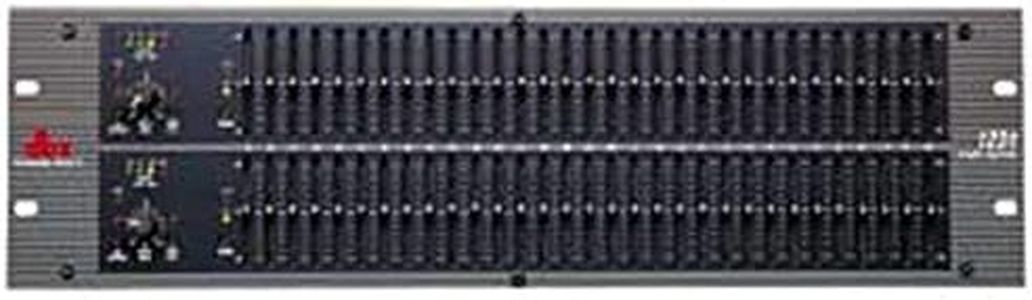
dbx 1215 Dual-Channel, 15-Band Graphic Equalizer

Rating
10.0
Chosen by1,275
Frequency Bands
Range of Adjustment
Signal-to-Noise Ratio (SNR)

Most important from
50 reviews

Frequency Bands
The number of frequency bands offers ample detail for shaping sound, making it suitable for fine-tuning complex audio needs.
Range of Adjustment
Having a wider boost/cut range of ±15 dB provides greater flexibility for precise audio adjustments beyond the usual limits.
Signal-to-Noise Ratio (SNR)
Balanced XLR inputs and outputs ensure clean, professional-level signal integrity, which is essential for high-quality sound setups.
Input and Output Connections
Some users would appreciate additional connection options like RCA jacks for broader compatibility, but the existing balanced and unbalanced jacks cover professional standards.

The dbx 1215 is a dual-channel graphic equalizer with 15 frequency bands, offering detailed control to shape your audio precisely. It features switchable boost/cut ranges of 6 or 15 dB, which allows for subtle or more dramatic adjustments depending on your needs. Inputs and outputs are versatile, including balanced and unbalanced ¼” TRS jacks, XLR connectors, and barrier terminal strips, making it compatible with a wide range of audio setups. The unit also includes RF filters on inputs and outputs to reduce unwanted interference, helping to keep your sound clean. The input gain can be adjusted within a ±12 dB range, giving additional flexibility for signal levels.

The unit is well-built and rack-mountable, suitable for both live and studio use. Weighing around 9 pounds, it's portable enough for mobile setups yet sturdy for permanent installations. Some users noted the equalizer's sound quality and reliability as strong points, though the 15-band complexity might be a bit overwhelming for beginners. The device supports both balanced and unbalanced connections.

The dbx 1215 is a solid choice for musicians, sound engineers, or enthusiasts who want detailed frequency control with flexible connectivity, especially if dual channels in one unit are required.

Rating
10.0
Chosen by1,275
Frequency Bands
Range of Adjustment
Signal-to-Noise Ratio (SNR)

Most important from
50 reviews

Frequency Bands
The number of frequency bands offers ample detail for shaping sound, making it suitable for fine-tuning complex audio needs.
Range of Adjustment
Having a wider boost/cut range of ±15 dB provides greater flexibility for precise audio adjustments beyond the usual limits.
Signal-to-Noise Ratio (SNR)
Balanced XLR inputs and outputs ensure clean, professional-level signal integrity, which is essential for high-quality sound setups.
Input and Output Connections
Some users would appreciate additional connection options like RCA jacks for broader compatibility, but the existing balanced and unbalanced jacks cover professional standards.
#2

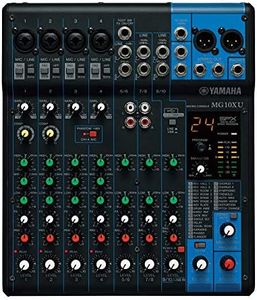
Yamaha MG10XU 10-Channel Analog Mixer, with 4 Microphone Preamps, 3 Dedicated Stereo Line Channels, 1 Aux Send, EQ, 1-knob Compressors, and Digital Effects

The Yamaha MG10XU is a compact 10-channel analog mixer featuring built-in 3-band equalizers on all mono channels, covering the basic frequency bands needed for simple sound shaping. Its analog EQ design allows quick and intuitive adjustments, offering straightforward control for live or recording use.

This mixer supports multiple input and output connections, including USB 2.0 for easy recording and playback with computers and tablets. It includes D-PRE mic preamps known for clean and natural sound, along with one-knob compressors for easy dynamics control, which help polish audio without complex settings. While it does not have a dedicated bypass function for the equalizer, channel muting and adjustments allow flexible sound routing.

Additionally, the built-in SPX digital effects provide more versatility beyond simple equalization. The MG10XU is well-suited for users needing a multi-purpose audio mixer with effective EQ controls rather than a high-precision, standalone stereo equalizer.

#3

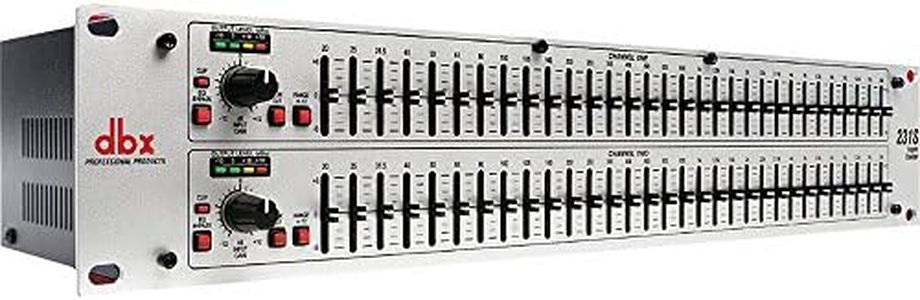
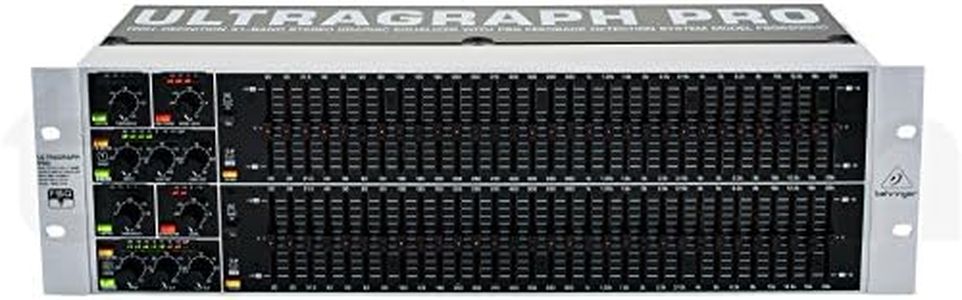
Behringer ULTRAGRAPH PRO FBQ3102HD High-Definition 31-Band Stereo Graphic Equalizer with FBQ Feedback Detection System

Rating
8.5
Frequency Bands

Most important from
266 reviews

Frequency Bands
The 31-band EQ allows for precise adjustments, such as boosting at 31.5 Hz and reducing harshness at 8 kHz.

The Behringer FBQ3102HD is a 31-band stereo graphic equalizer that stands out with its broad range of frequency adjustments. This makes it well-suited for detailed audio tuning, catering to both professional and amateur sound engineers. The additional sweepable high and low-cut filters are useful for removing unwanted frequencies like floor rumble and hiss, enhancing the audio clarity. It also includes a dedicated mono subwoofer output with an adjustable crossover frequency, which can be beneficial for users with complex audio setups needing precise low-end management.

The FBQ Feedback Detection System is a noteworthy feature that identifies critical frequencies quickly, doubling as an audio analyzer which can be highly useful during live performances or recordings to minimize feedback issues. One notable strength is the signal-to-noise ratio, which is crucial for maintaining audio integrity without introducing unwanted noise. The inclusion of USB 2.0 hardware interface and corded electric power source ensures reliable and consistent performance. However, the unit's weight of 6 pounds and dimensions indicate it may not be the most portable option for users who need a more mobile solution.

With a strong customer rating of 4.5 out of 5 stars, many users seem satisfied with its performance and reliability. The Behringer FBQ3102HD caters well to detailed audio tuning needs, making it a strong contender for studio and live sound applications, though its portability and bypass function specifics could be potential drawbacks for some users.

Rating
8.5
Frequency Bands

Most important from
266 reviews

Frequency Bands
The 31-band EQ allows for precise adjustments, such as boosting at 31.5 Hz and reducing harshness at 8 kHz.

Buying Guide for the Best Stereo Equalizers

Choosing the right stereo equalizer can significantly enhance your audio experience by allowing you to adjust the balance between different frequency components of your audio signal. Whether you're a music enthusiast, a professional sound engineer, or just someone who wants better sound quality, understanding the key specifications of stereo equalizers will help you make an informed decision. Here are the main specs to consider and how to navigate them to find the best fit for your needs.
Frequency BandsFrequency bands refer to the specific ranges of frequencies that the equalizer can adjust. This spec is important because it determines how precisely you can control different parts of the audio spectrum. Equalizers can have a varying number of bands, typically ranging from 5 to 31. A 5-band equalizer offers basic control over bass, midrange, and treble, suitable for casual listeners. A 10-band equalizer provides more detailed control, ideal for enthusiasts who want to fine-tune their sound. A 31-band equalizer offers professional-level precision, perfect for sound engineers and audiophiles. Choose the number of bands based on how much control you want over your audio.
Type of EqualizerThere are two main types of equalizers: graphic and parametric. A graphic equalizer has fixed frequency bands with sliders that you can adjust up or down, making it easy to visualize and use. This type is great for users who want straightforward control over their sound. A parametric equalizer, on the other hand, allows you to adjust the frequency, bandwidth, and gain for each band, offering more flexibility and precision. This type is ideal for advanced users who need detailed control over their audio. Choose a graphic equalizer for simplicity and a parametric equalizer for more advanced control.
Range of AdjustmentThe range of adjustment, often measured in decibels (dB), indicates how much you can boost or cut each frequency band. This spec is important because it determines the extent to which you can modify the sound. Common ranges include ±6 dB, ±12 dB, and ±15 dB. A ±6 dB range offers subtle adjustments, suitable for minor tweaks. A ±12 dB range provides more noticeable changes, ideal for most users. A ±15 dB range allows for significant modifications, perfect for those who need extensive control over their audio. Choose the range based on how much you want to alter your sound.
Signal-to-Noise Ratio (SNR)The signal-to-noise ratio (SNR) measures the level of the desired signal compared to the level of background noise, expressed in decibels (dB). This spec is important because a higher SNR means clearer sound with less background noise. Typical SNR values for equalizers range from 80 dB to 110 dB. An SNR of 80 dB is adequate for casual listening, while an SNR of 90 dB or higher is better for critical listening and professional use. Choose an equalizer with a higher SNR if you need cleaner sound quality.
Input and Output ConnectionsInput and output connections determine how you can connect the equalizer to your audio system. This spec is important because it affects compatibility with your existing equipment. Common connections include RCA, XLR, and 1/4-inch TRS. RCA connections are typical for consumer audio equipment, making them suitable for home use. XLR and 1/4-inch TRS connections are more common in professional audio gear, offering balanced connections for reduced noise. Choose the type of connections based on the equipment you plan to use with the equalizer.
Bypass FunctionA bypass function allows you to switch the equalizer in and out of the signal path without disconnecting it. This spec is important because it lets you compare the equalized sound with the original sound easily. A bypass function is useful for users who want to hear the difference their adjustments make or for those who occasionally prefer the unaltered audio signal. Choose an equalizer with a bypass function if you value the ability to quickly switch between equalized and original sound.

FAQ