We Use CookiesWe use cookies to enhance the security, performance, functionality and for analytical and promotional activities. By continuing to browse this site you are agreeing to our privacy policy

10 Best Sound Mixers 2026 in the United States
How do we rank products for you?

Our technology thoroughly searches through the online shopping world, reviewing hundreds of sites. We then process and analyze this information, updating in real-time to bring you the latest top-rated products. This way, you always get the best and most current options available.

headphones-stars

Our Top Picks

#1

Winner

Yamaha MG16XU 16-Input 6-Bus Mixer with Effects

Rating
10.0
Chosen by1,126
Number of Channels
Built-in Effects
Connectivity Options

Most important from
294 reviews

Number of Channels
Some users wish for more three-band EQ channels and independent FX sends for greater control.
Built-in Effects
Built-in compressors and digital effects, especially the reverb, add professional polish and help glue the mix together effortlessly.
Connectivity Options
USB connectivity makes it easy to integrate with computers for recording and playback without hassle.
Portability
While not lightweight or highly portable, the mixer’s durable build and consistent performance make it an excellent choice for small bands and live venues.
User Interface
Sound controls are intuitive and accurate, allowing precise adjustments even in complex setups like multi-mic drum kits.

The Yamaha MG16XU is a solid choice for those needing a 16-channel mixer with versatile features. It offers a good number of inputs, including up to 10 mic inputs, which suits small bands, live events, or recording setups. Its analog design with studio-grade class-A D-PRE preamps delivers clear, natural sound, especially in bass and highs. The built-in SPX digital effects and 1-knob compressors help enhance your mix easily without needing complex adjustments. The 3-band EQ and high-pass filters provide useful control to reduce unwanted noise and improve clarity.

Connectivity is flexible with USB support, making it convenient to connect to computers for recording or streaming. On the downside, the mixer weighs about 15 pounds and has a robust metal build, so it’s not the most portable option if you need something lightweight for frequent travel. The user interface is straightforward but may feel a bit basic to those wanting touchscreen controls or visual feedback.

Although it’s not the newest model, the MG16XU remains popular due to its reliable performance and solid sound quality. This mixer fits well for hobbyists, small venues, and semi-professional use where quality sound and durability matter more than ultra-compact size or advanced digital features.

Rating
10.0
Chosen by1,126
Number of Channels
Built-in Effects
Connectivity Options

Most important from
294 reviews

Number of Channels
Some users wish for more three-band EQ channels and independent FX sends for greater control.
Built-in Effects
Built-in compressors and digital effects, especially the reverb, add professional polish and help glue the mix together effortlessly.
Connectivity Options
USB connectivity makes it easy to integrate with computers for recording and playback without hassle.
Portability
While not lightweight or highly portable, the mixer’s durable build and consistent performance make it an excellent choice for small bands and live venues.
User Interface
Sound controls are intuitive and accurate, allowing precise adjustments even in complex setups like multi-mic drum kits.
#2

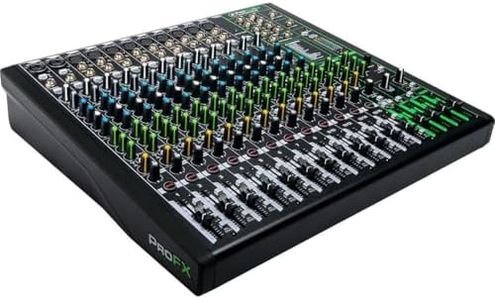
Mackie ProFX16v3 16-channel Mixer with USB and Effects

Rating
8.5
Analog vs. Digital
Built-in Effects
Connectivity Options

Most important from
2184 reviews

Analog vs. Digital
Combining analog warmth with modern USB functionality offers great value at an affordable price.
Built-in Effects
Built-in effects and EQ controls provide versatile sound shaping without needing extra gear.
Connectivity Options
Bluetooth connectivity makes it simple to connect devices remotely, ideal for DJing and presentations.
Portability
This mixer is small but packed with powerful features that perfectly fit home use and recording setups.
User Interface
The included software greatly enhances comfort and ease when recording via computer.

The Mackie ProFX16v3 is a solid choice if you need a versatile analog sound mixer with 16 channels, making it suitable for live performances, home studios, and streaming setups. It features high-quality Onyx mic preamps that offer strong, clean gain with low noise—great if you use sensitive microphones or record vocals. The mixer is analog but includes USB connectivity, allowing you to record or play back audio through your computer in crystal-clear 24-bit/192kHz resolution, which is impressive for this price range. It also supports sending two customized mixes back to the mixer, useful for musicians who want individual monitoring while recording.

With 24 built-in effects like reverb and delay, you can easily enhance your sound without needing extra gear. The interface is straightforward, with a handy knob for blending between computer audio and live input, simplifying tasks like overdubbing. On the downside, at nearly 20 pounds and a fairly solid steel build, it’s less portable than smaller mixers, so it’s better suited to semi-permanent setups rather than frequent transport.

While it offers plenty of connectivity options, it doesn’t have the digital mixing flexibility found in fully digital mixers, which might be a consideration if you want more advanced routing or saving presets. For anyone needing robust analog mixing with modern USB features and built-in effects, especially in live or recording scenarios, the ProFX16v3 delivers strong performance and user-friendly controls.

Rating
8.5
Analog vs. Digital
Built-in Effects
Connectivity Options

Most important from
2184 reviews

Analog vs. Digital
Combining analog warmth with modern USB functionality offers great value at an affordable price.
Built-in Effects
Built-in effects and EQ controls provide versatile sound shaping without needing extra gear.
Connectivity Options
Bluetooth connectivity makes it simple to connect devices remotely, ideal for DJing and presentations.
Portability
This mixer is small but packed with powerful features that perfectly fit home use and recording setups.
User Interface
The included software greatly enhances comfort and ease when recording via computer.
#3

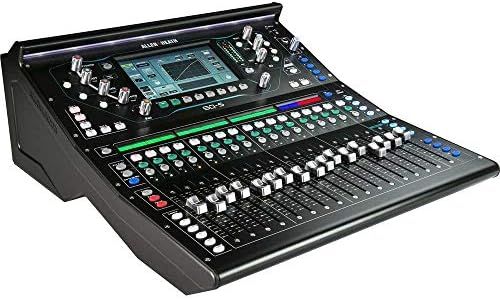
Allen & Heath SQ-5 Digital Mixer, 48 Input Channels, 7" Capacitive Touchscreen, Automatic Mic Mixing, 32×32 USB Audio Interface, Black

Rating
7.9
Number of Channels
Built-in Effects
Connectivity Options

Most important from
12 reviews

Number of Channels
With 48 input channels in a compact 19" rack format, this mixer is perfect for complex audio setups.
Built-in Effects
DEEP processing is a highlight, offering plugin-like effects and versatility in mixing capabilities.
Connectivity Options
The 96k very low latency and 32 channel USB interface ensure clean and high-quality sound processing.
User Interface
The SQ-5 stands out with its top-notch build quality and large touchscreen, enhancing the user interface experience.

The Allen & Heath SQ-5 Digital Mixer is a robust choice for those needing a professional-grade sound mixer. It stands out with its impressive 48 input channels, making it suitable for complex audio setups. The digital nature of the mixer ensures high-quality sound processing with less than 0.7ms latency, which is excellent for live performances and studio recordings.

Its 7-inch capacitive touchscreen simplifies navigation and control, enhancing the user interface experience. Additionally, the automatic mic mixing and built-in effects like DEEP plug-ins and 8 stereo FX engines add versatility to your mixing capabilities. Connectivity is robust with a 32×32 USB audio interface and various output options, including AES and XLR, providing flexibility for different audio setups and expansions.

However, at 29.3 pounds, it is not the most portable option available, making it more suitable for stationary setups rather than frequent transportation. While the mixer is rack-mountable, its size might still be a consideration for those with limited space. Despite these minor drawbacks, the SQ-5's comprehensive features and high-quality performance make it an excellent choice for professional audio engineers and serious hobbyists looking for a reliable and versatile digital mixer.

Rating
7.9
Number of Channels
Built-in Effects
Connectivity Options

Most important from
12 reviews

Number of Channels
With 48 input channels in a compact 19" rack format, this mixer is perfect for complex audio setups.
Built-in Effects
DEEP processing is a highlight, offering plugin-like effects and versatility in mixing capabilities.
Connectivity Options
The 96k very low latency and 32 channel USB interface ensure clean and high-quality sound processing.
User Interface
The SQ-5 stands out with its top-notch build quality and large touchscreen, enhancing the user interface experience.

Buying Guide for the Best Sound Mixers

Choosing the right sound mixer can significantly impact the quality of your audio production, whether you're working on music, podcasts, live events, or film. A sound mixer, also known as an audio mixer or mixing console, allows you to combine, process, and adjust multiple audio signals. To find the best fit for your needs, it's essential to understand the key specifications and how they align with your specific requirements. Here are the main specs to consider when selecting a sound mixer.
Number of ChannelsThe number of channels on a sound mixer determines how many audio sources you can connect and control simultaneously. This is important because it dictates the mixer's capacity to handle multiple inputs like microphones, instruments, and other audio devices. Mixers with fewer channels (4-8) are suitable for small setups like solo performances or podcasts. Mid-range mixers (8-16 channels) are ideal for small bands or more complex podcast setups. Larger mixers (16+ channels) are necessary for full bands, live events, or professional studio recordings. Choose a mixer with enough channels to accommodate your current and potential future needs.
Analog vs. DigitalSound mixers come in two main types: analog and digital. Analog mixers are typically easier to use and more affordable, making them a good choice for beginners or those who prefer a straightforward, hands-on approach. Digital mixers offer more advanced features like built-in effects, presets, and the ability to save and recall settings, which can be beneficial for more complex productions or live sound environments. If you need flexibility, advanced processing, and the ability to integrate with other digital equipment, a digital mixer might be the better choice. For simpler setups or if you prefer tactile controls, an analog mixer could be more suitable.
Built-in EffectsMany sound mixers come with built-in effects such as reverb, delay, and equalization. These effects can enhance your audio production by adding depth and character to the sound. Built-in effects are particularly useful for live performances, where you might not have the time or resources to use external effects processors. If you plan to use your mixer for live events or want to simplify your setup, look for a mixer with a variety of built-in effects. However, if you already have external effects units or prefer to use software for processing, this feature might be less critical.
Connectivity OptionsThe connectivity options on a sound mixer determine how you can integrate it with other equipment. Common connections include XLR and 1/4-inch inputs for microphones and instruments, USB or FireWire for connecting to computers, and RCA or 1/8-inch jacks for consumer audio devices. Some mixers also offer Bluetooth connectivity for wireless streaming. Ensure the mixer you choose has the appropriate inputs and outputs for your current gear and any future additions. For example, if you plan to record directly to a computer, a mixer with USB or FireWire connectivity would be essential.
PortabilityPortability is an important consideration if you need to transport your mixer frequently, such as for live gigs or mobile recording sessions. Portable mixers are typically smaller, lighter, and may have fewer channels and features compared to larger, more stationary models. If you need a mixer that you can easily carry and set up in different locations, look for a compact and lightweight model. However, if your mixer will primarily stay in a studio or fixed location, portability may be less of a concern, and you can opt for a larger model with more features.
User InterfaceThe user interface of a sound mixer affects how easily you can operate it. A well-designed interface with clearly labeled controls and an intuitive layout can make a significant difference, especially during live performances or complex recording sessions. Analog mixers typically have a straightforward, hands-on interface with physical knobs and faders, which some users find more intuitive. Digital mixers may have more complex interfaces with touchscreens and menus, but they also offer more advanced features and customization options. Consider your comfort level with technology and your specific workflow needs when evaluating the user interface of a mixer.

FAQ