We Use CookiesWe use cookies to enhance the security, performance, functionality and for analytical and promotional activities. By continuing to browse this site you are agreeing to our privacy policy

10 Best Guitar Volume Pedals 2026 in the United States
How do we rank products for you?

Our technology thoroughly searches through the online shopping world, reviewing hundreds of sites. We then process and analyze this information, updating in real-time to bring you the latest top-rated products. This way, you always get the best and most current options available.

headphones-stars

Our Top Picks

#1

Winner

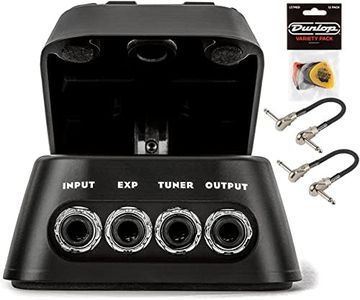
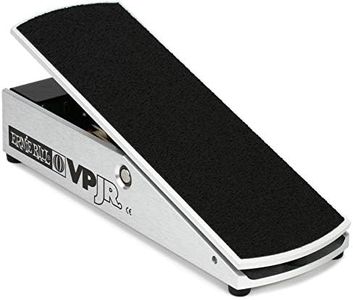
Ernie Ball VP JR Tuner Pedal, Black (P06203)

Rating
10.0
Chosen by1,175
Size and Build Quality
Additional Features

Most important from
216 reviews

Size and Build Quality
The pedal's design saves board space, which is extremely useful for those with extensive setups.
Additional Features
Combining a volume pedal with a great tuner, this pedal is well worth its price, especially for live performances.

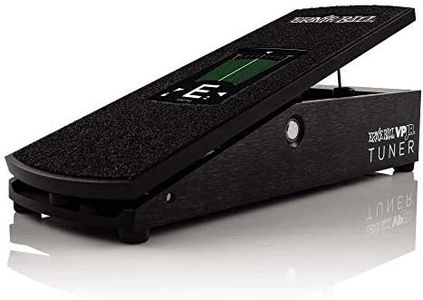
The Ernie Ball VP JR Tuner Pedal is an innovative 2-in-1 pedal that combines a volume pedal with a digital tuner, making it a versatile choice for guitar or bass players. Its rugged construction ensures durability, while the compact size helps save space on your pedalboard. The pedal operates in a passive mode, meaning it doesn't require power to function, though the tuner feature will need power to operate effectively.

This dual functionality is highly convenient; in the heel down position (volume off), the display switches to tuner mode, offering an accurate and visually appealing tuning experience. As you press the pedal forward, the screen then shows your volume level, which is great for live performances where quick adjustments are necessary. Additionally, you can set the display to show only the volume or only the tuning mode by double-tapping the touchscreen, giving you customization options based on your needs.

However, the pedal weighs 1.18 kilograms, which might be a bit heavy for some users looking for ultra-light gear. Also, if you prefer an active pedal that can boost your signal, this passive one might not meet your expectations. Despite these minor drawbacks, the Ernie Ball VP JR Tuner Pedal stands out with its dual functionality and sturdy build, making it a valuable addition to any guitarist's setup.

Rating
10.0
Chosen by1,175
Size and Build Quality
Additional Features

Most important from
216 reviews

Size and Build Quality
The pedal's design saves board space, which is extremely useful for those with extensive setups.
Additional Features
Combining a volume pedal with a great tuner, this pedal is well worth its price, especially for live performances.
#2

JIM DUNLOP Dunlop, / Volume X Mini Pedal (DVP4)

Rating
9.1
Size and Build Quality
Type (Active vs. Passive)
Taper

Most important from
582 reviews

Size and Build Quality
The pedal's compact size offers a smaller footprint that fits perfectly on crowded pedalboards without feeling fragile underfoot.
Type (Active vs. Passive)
No external power or batteries are required, making it a simple plug-and-play volume or expression pedal.
Taper
The smooth, responsive action allows quick, comfortable control, especially appreciated for precise volume swells.
Additional Features
Versatility shines through as it works seamlessly both as a volume pedal on analog setups and as an expression pedal with processors.

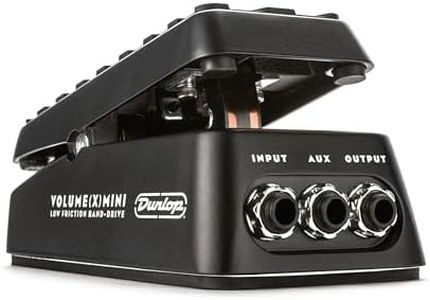
The Jim Dunlop Volume X Mini Pedal is a compact, well-built volume pedal designed for guitar players who need precise control without sacrificing space on their pedalboard. Its small size (6" x 3.5" x 3.5") makes it ideal for travel or crowded setups. The pedal operates without requiring power, as it’s an analog, passive-style unit, making it simple plug-and-play with no batteries or adapters needed. Its internal controls allow you to fine-tune settings like heel/toe polarity and minimum volume levels, adding flexibility to how you integrate it with other effects or tuners.

The low-friction band-drive mechanism provides smooth, consistent pedal action that’s been tested for durability, so it should hold up well to regular use. The adjustable torque ensures you can set the pedal resistance to your liking, which helps with comfortable foot control during performance. While the pedal’s passive design is convenient, it might not match the impedance or transparency of some active volume pedals, which could affect tone subtlety in certain setups. Also, its smaller size might feel less stable for players who prefer a larger pedal surface for foot placement.

This pedal is well-suited for guitarists who want a reliable, compact volume control that’s easy to use and built tough, especially those who value portability and pedalboard space. It proves to be a solid choice for both stage and studio use, particularly if you need smooth swells and dynamic expression without complex setup.

Rating
9.1
Size and Build Quality
Type (Active vs. Passive)
Taper

Most important from
582 reviews

Size and Build Quality
The pedal's compact size offers a smaller footprint that fits perfectly on crowded pedalboards without feeling fragile underfoot.
Type (Active vs. Passive)
No external power or batteries are required, making it a simple plug-and-play volume or expression pedal.
Taper
The smooth, responsive action allows quick, comfortable control, especially appreciated for precise volume swells.
Additional Features
Versatility shines through as it works seamlessly both as a volume pedal on analog setups and as an expression pedal with processors.
#3

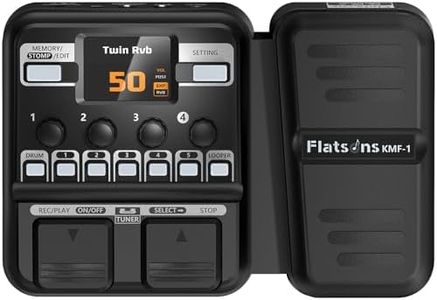
Flatsons KMF-1 Guitar Pedal, 77 Effects Guitar Multi Effects Pedal with 50 Preset, 42 Drum Rhythm, 18 Amp/Cab, Upgraded Color Screen, Aux In, Guitar Tuner Looper Expression Wah Volume Distortion Pedal

Rating
8.8
Additional Features

Most important from
341 reviews

Additional Features
Equipped with versatile controls that enhance creativity, supporting both volume and wah functions seamlessly.

The Flatsons KMF-1 is a versatile guitar multi-effects pedal that goes beyond just volume control, offering a large variety of sounds and effects ideal for creative guitar players of all levels. It uses advanced digital technology to simulate analog amp and cabinet sounds very precisely, which helps deliver clear and dynamic tones whether you're practicing, recording, or performing live. With 77 effects, including amp models, reverbs, delays, and modulation, plus 50 presets and a looper, this pedal is like having a mini studio at your feet.

It features a clear, easy-to-read color screen and intuitive controls, making it simpler to switch effects on the fly. The expression pedal supports multiple effect controls, adding to its flexibility. Size-wise, it is larger and heavier than basic volume pedals, taking up more pedalboard space and weighing over 2.5 pounds, which might matter if you travel frequently. The pedal runs on a 9V adapter or 6 AA batteries, with battery life around 2.5 hours, so using an adapter is recommended for longer sessions.

This pedal is great if you want a rich, all-in-one effects experience with volume and wah control included, but it might be more than what someone just needing a simple volume pedal requires. For players seeking broad tone options and creative flexibility in a single unit, the KMF-1 offers excellent value, though beginners should expect a learning curve to unlock all its features.

Rating
8.8
Additional Features

Most important from
341 reviews

Additional Features
Equipped with versatile controls that enhance creativity, supporting both volume and wah functions seamlessly.

Buying Guide for the Best Guitar Volume Pedals

Choosing the right guitar volume pedal can significantly enhance your playing experience by giving you control over your sound dynamics. A volume pedal allows you to adjust the volume of your guitar without using your hands, which can be particularly useful during live performances or when you need to make quick adjustments. To find the best fit for you, it's important to understand the key specifications and how they align with your needs and playing style.
Type (Active vs. Passive)Volume pedals come in two main types: active and passive. Active volume pedals require a power source (usually a battery or power adapter) and often include a buffer to maintain signal strength, which is important if you use long cable runs or have a lot of pedals in your signal chain. Passive volume pedals do not require power and are simpler in design, but they can sometimes cause a loss in signal strength. If you have a complex setup or need to preserve your tone, an active pedal might be the better choice. If you prefer simplicity and don't have a long signal chain, a passive pedal could be sufficient.
ImpedanceImpedance refers to the resistance of the pedal to the electrical signal from your guitar. Volume pedals come in high-impedance and low-impedance versions. High-impedance pedals are typically used with passive pickups (common in electric guitars), while low-impedance pedals are used with active pickups or in the effects loop of an amplifier. Choosing the right impedance is crucial for maintaining your guitar's tone. If you use a standard electric guitar with passive pickups, go for a high-impedance pedal. If you have active pickups or plan to place the pedal in the effects loop, opt for a low-impedance pedal.
Size and Build QualityThe size and build quality of a volume pedal can affect its durability and ease of use. Larger pedals often provide a more comfortable and precise control but can take up more space on your pedalboard. Smaller pedals are more compact and portable but might be less comfortable for some players. Build quality is also important; a well-constructed pedal made from durable materials will last longer and withstand the rigors of frequent use. Consider how much space you have on your pedalboard and how often you plan to use the pedal when deciding on the size and build quality.
TaperThe taper of a volume pedal refers to how the volume changes as you move the pedal. There are two main types: linear and audio (logarithmic) taper. A linear taper changes the volume evenly across the pedal's range, while an audio taper changes the volume more gradually at the beginning and more rapidly towards the end, mimicking the way our ears perceive sound. If you want smooth and gradual volume changes, an audio taper might be more suitable. If you prefer a more predictable and even volume change, a linear taper could be the better option.
Additional FeaturesSome volume pedals come with additional features such as built-in tuners, expression pedal capabilities, or adjustable minimum volume settings. These features can add versatility to your pedal and enhance your playing experience. For example, a built-in tuner can save space on your pedalboard, while an expression pedal capability can allow you to control other effects. Consider what additional features might be useful for your playing style and whether they justify any extra cost or complexity.

FAQ