We Use CookiesWe use cookies to enhance the security, performance, functionality and for analytical and promotional activities. By continuing to browse this site you are agreeing to our privacy policy

10 Best Android Head Units 2026 in the United States
How do we rank products for you?

Our technology thoroughly searches through the online shopping world, reviewing hundreds of sites. We then process and analyze this information, updating in real-time to bring you the latest top-rated products. This way, you always get the best and most current options available.

headphones-stars

Our Top Picks

#1

Winner

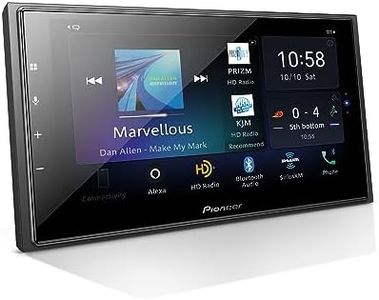
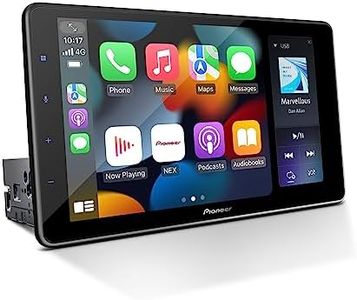
Pioneer DMH-W4660NEX 6.8" Capacitive Touchscreen, Double Din – Wireless & Wired Apple CarPlay & Android Auto, Amazon Alexa Built-in, Bluetooth, HD Radio, Backup Camera, FLAC, Hi-Volt RCA

Rating
10.0
Chosen by1,310
Screen Size
Connectivity
Audio Quality

Most important from
327 reviews

Screen Size
The touchscreen is very responsive with easy-to-press buttons, providing a clear and user-friendly display.
Connectivity
Wireless Apple CarPlay works flawlessly almost every time, enhancing hands-free smartphone integration.
Audio Quality
Sound customization options and EQ adjustments deliver excellent audio quality tailored to personal preferences.

The Pioneer DMH-W4660NEX is a solid choice for an Android head unit offering a good balance of features and usability. It features a 6.8-inch capacitive touchscreen that provides a clear, responsive display for easy control while driving. The device supports both wireless and wired Apple CarPlay and Android Auto, enabling seamless and safe smartphone integration for hands-free use. Its built-in Amazon Alexa adds convenience by allowing voice commands for music, navigation, and smart home controls without distraction.

Connectivity options include Bluetooth for calls and audio streaming, USB ports, and HDMI input, offering flexibility for various devices. The unit supports a rear backup camera, improving safety during parking. Audio quality is enhanced with stereo output and support for high-quality audio formats like FLAC, enriching the listening experience. The user interface is straightforward and designed for easy access to apps and settings.

This unit does not include built-in GPS navigation, so you will need to use your phone’s navigation apps via CarPlay or Android Auto. This might be a drawback for those who prefer a standalone navigation system. The DMH-W4660NEX suits drivers looking for an easy-to-use, connected multimedia receiver with smart voice control and smartphone features.

Rating
10.0
Chosen by1,310
Screen Size
Connectivity
Audio Quality

Most important from
327 reviews

Screen Size
The touchscreen is very responsive with easy-to-press buttons, providing a clear and user-friendly display.
Connectivity
Wireless Apple CarPlay works flawlessly almost every time, enhancing hands-free smartphone integration.
Audio Quality
Sound customization options and EQ adjustments deliver excellent audio quality tailored to personal preferences.
#2

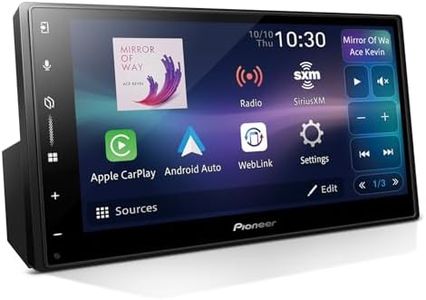
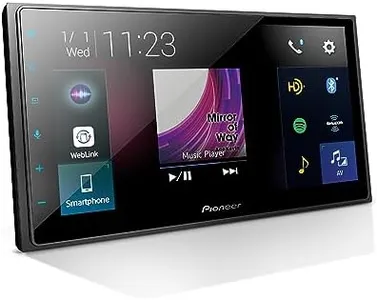
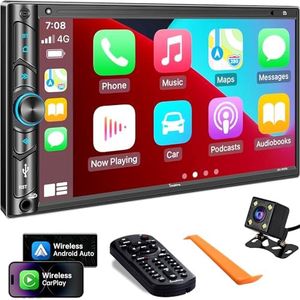
Pioneer DMH-W3000NEX 6.8" Double Din Multimedia Digital Media Receiver, Wireless Apple CarPlay and Android Auto, Bluetooth, Backup Camera Compatible, Touchscreen, One Touch Navigation

Rating
9.4
Resolution
Connectivity Options
Audio Quality

Most important from
89 reviews

Resolution
Quick screen response and crisp display quality.
Connectivity Options
The Bluetooth connectivity is solid, automatically pairing with my phone every time I start the car.
Audio Quality
The EQ adjustments allow for good sound customization, and the screen layout is intuitive.

The Pioneer DMH-W3000NEX is a versatile android head unit with a 6.8-inch capacitive touchscreen that offers a good balance of features. The screen size is adequate for easy visibility and interaction while driving. It supports both wired and wireless Apple CarPlay and Android Auto, making smartphone integration seamless and convenient. This means you can safely access navigation, music, and other apps through the touchscreen or voice commands using Siri or Google Assistant.

The inclusion of Amazon Alexa via the Vozsis app adds another layer of voice control functionality, although this requires additional app downloads to set up. The Bluetooth functionality is robust, allowing for hands-free calls and wireless audio streaming, which is essential for keeping your focus on the road. One-touch navigation makes it easy to switch between CarPlay/Android Auto and the settings, enhancing user convenience.

Additionally, the ability to connect a backup camera is a significant safety feature, making parking and reversing safer. However, the unit seems to lack some high-end audio features that audiophiles might seek, and the stereo output may not be enough for those looking for a high-fidelity audio experience. The fact that it has only 2 channels might be a limitation for users wanting a more complex audio setup. This head unit is well-suited for those looking for a multifunctional, user-friendly device that enhances driving safety and convenience.

Rating
9.4
Resolution
Connectivity Options
Audio Quality

Most important from
89 reviews

Resolution
Quick screen response and crisp display quality.
Connectivity Options
The Bluetooth connectivity is solid, automatically pairing with my phone every time I start the car.
Audio Quality
The EQ adjustments allow for good sound customization, and the screen layout is intuitive.
#3

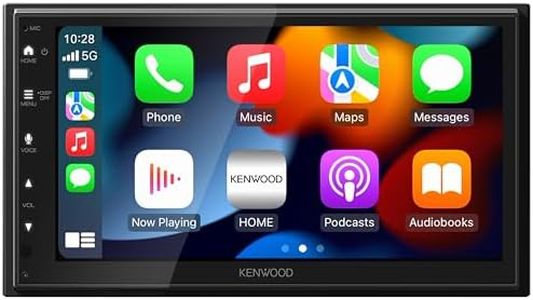
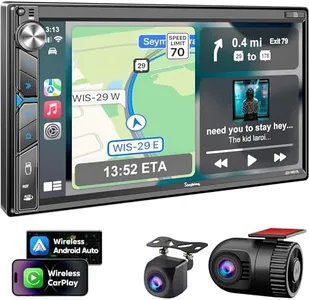
KENWOOD DMX500S 6.8" Capacitive Touchscreen Digital Multimedia Receiver – Wireless Apple CarPlay, Android Auto, Bluetooth

Rating
8.2
Connectivity
User Interface
Audio Quality

Most important from
58 reviews

Connectivity
Wireless CarPlay and Android Auto work seamlessly, offering a clean and responsive connection without lag.
User Interface
The touchscreen is sharp, quick to respond, and easy to navigate, enhancing overall usability.
Audio Quality
Sound quality is impressive with intuitive settings, delivering a great listening experience right out of the box.

The Kenwood DMX500S is a solid choice for anyone looking to upgrade their car stereo with modern smartphone integration. It features a sharp 6.8-inch capacitive touchscreen with a clear 1024x600 resolution, making maps, calls, and music easy to view and control. It supports wireless Apple CarPlay and Android Auto, enabling phone connection without cables and voice commands for safer driving. Bluetooth allows hands-free calls and audio streaming, with the option to pair two phones simultaneously—a convenient feature for shared vehicles.

On the audio side, this unit has a built-in 200-watt amplifier (50 watts per channel) and advanced sound controls like a 13-band graphic equalizer and digital time alignment, allowing customization of the listening experience whether using factory speakers or an upgraded setup with a subwoofer. It supports backup cameras with helpful on-screen parking guides, enhancing safety when reversing. Connectivity options are comprehensive, including USB ports for charging and media playback, HDMI for video output to rear monitors, and compatibility with steering wheel controls to keep the driver focused on the road. The user interface is smooth and responsive thanks to the capacitive touchscreen.

One consideration is the absence of a dedicated GPS system; navigation relies on your smartphone through CarPlay or Android Auto, so your phone must be connected for maps. Additionally, while storage is sufficient for system functions, there is no internal storage for apps or media, making this unit best paired with your phone for most tasks. The DMX500S delivers excellent smartphone integration, good sound customization, and user-friendly controls, making it a great fit for drivers seeking a modern, flexible digital receiver without the need for extra amps or complex setups.

Rating
8.2
Connectivity
User Interface
Audio Quality

Most important from
58 reviews

Connectivity
Wireless CarPlay and Android Auto work seamlessly, offering a clean and responsive connection without lag.
User Interface
The touchscreen is sharp, quick to respond, and easy to navigate, enhancing overall usability.
Audio Quality
Sound quality is impressive with intuitive settings, delivering a great listening experience right out of the box.

Buying Guide for the Best Android Head Units

Choosing the right Android head unit for your car can significantly enhance your driving experience by providing better navigation, entertainment, and connectivity. To make an informed decision, it's important to understand the key specifications and features that matter most. Here's a guide to help you navigate through the essential specs and pick the best fit for your needs.
Screen SizeScreen size refers to the diagonal measurement of the display. It's important because a larger screen can provide better visibility and easier interaction, especially for navigation and media controls. Screen sizes typically range from 6 to 10 inches. If you frequently use navigation or watch videos, a larger screen might be more suitable. However, ensure it fits well within your car's dashboard space.
ResolutionResolution indicates the number of pixels on the screen, affecting the clarity and sharpness of the display. Higher resolution means better image quality. Common resolutions include 800x480, 1024x600, and 1280x720. If you want crisp visuals for maps and media, opt for a higher resolution. For basic use, a lower resolution might suffice.
Operating System VersionThe operating system version determines the software features and compatibility with apps. Newer versions of Android offer better performance, security, and access to the latest apps. Versions range from Android 6.0 to the latest available. Choose a head unit with a recent OS version to ensure smooth operation and future-proofing.
ProcessorThe processor is the brain of the head unit, affecting its speed and responsiveness. Common processors include dual-core, quad-core, and octa-core. More cores generally mean better multitasking and faster performance. If you plan to use multiple apps simultaneously or require quick responses, opt for a quad-core or octa-core processor.
RAMRAM (Random Access Memory) impacts the head unit's ability to handle multiple tasks at once. More RAM means smoother performance and less lag. Typical options range from 1GB to 4GB. For basic navigation and media playback, 1GB might be sufficient. For more demanding use, such as running multiple apps, consider 2GB or more.
StorageStorage capacity determines how much data and apps you can store on the head unit. Options usually range from 16GB to 64GB. If you plan to store a lot of music, videos, or apps, opt for higher storage. For basic use, lower storage might be adequate, but ensure it supports external storage options like SD cards.
ConnectivityConnectivity features include Bluetooth, Wi-Fi, and USB ports, which are essential for pairing with your phone, accessing the internet, and connecting external devices. Ensure the head unit has Bluetooth for hands-free calling and audio streaming, Wi-Fi for internet access, and USB ports for charging and data transfer. If you use multiple devices, check for multiple connectivity options.
GPS NavigationGPS navigation is crucial for providing accurate directions and real-time traffic updates. Some head units come with built-in GPS, while others rely on your smartphone's GPS. If you frequently travel to unfamiliar places, a head unit with built-in GPS can be more reliable. Ensure it supports offline maps for areas with poor signal.
Audio QualityAudio quality is important for enjoying music and making clear phone calls. Look for features like equalizers, preamp outputs, and support for high-quality audio formats. If you're an audiophile or frequently use your car for entertainment, prioritize head units with advanced audio features. Basic users might be satisfied with standard audio quality.
User InterfaceThe user interface affects how easy it is to navigate and use the head unit. Look for intuitive and responsive interfaces with customizable options. If you prefer simplicity, choose a head unit with a straightforward interface. For tech-savvy users, advanced customization and features might be more appealing.

FAQ