We Use CookiesWe use cookies to enhance the security, performance, functionality and for analytical and promotional activities. By continuing to browse this site you are agreeing to our privacy policy

10 Best Wireless PoE Access Points 2026 in the United States
How do we rank products for you?

Our technology thoroughly searches through the online shopping world, reviewing hundreds of sites. We then process and analyze this information, updating in real-time to bring you the latest top-rated products. This way, you always get the best and most current options available.

headphones-stars

Our Top Picks

#1

Winner

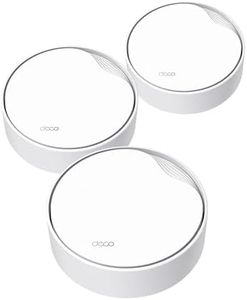
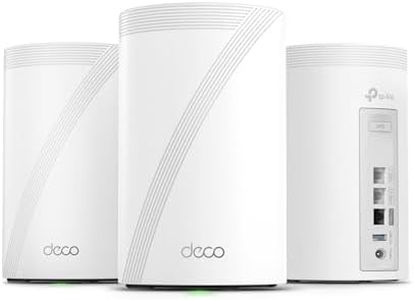
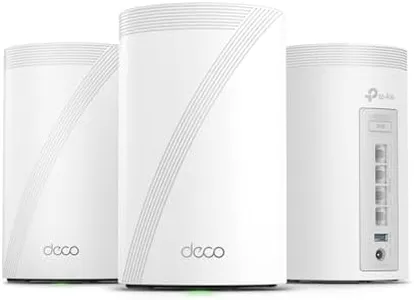
TP-Link Deco X50-PoE AX3000 PoE Mesh WiFi System - Ceiling/Wall-Mountable WiFi 6 Mesh, Replacing WiFi Router, Access Point and Range Extender, PoE-Powered, 2 x 2.5G Ports, Deco X50-PoE(3-Pack)

Rating
10.0
Chosen by1,264
Security Features

Most important from
363 reviews

Security Features
Built-in TP-Link HomeShield offers network protection, parental controls, and device prioritization for gaming or work.

The TP-Link Deco AX3000 PoE Mesh WiFi (Deco X50-PoE) system is designed to replace traditional routers and range extenders, offering a fast and reliable WiFi 6 connection. This 3-pack unit provides extensive coverage of up to 6,500 sq.ft and supports up to 150 devices, making it ideal for larger homes or small businesses. The WiFi 6 technology ensures high-speed internet across dual bands with 2402 Mbps on 5 GHz and 574 Mbps on 2.4 GHz, which is great for activities such as video streaming, online gaming, and downloading large files simultaneously.

The system's PoE (Power over Ethernet) capabilities allow for flexible placement, including ceiling mounting, which can help improve signal distribution throughout the premises. With one 2.5G and one Gigabit PoE port per unit, the Deco X50-PoE provides excellent wired performance as well. This can be particularly useful for creating a robust backhaul network when used with a PoE+ switch (not included). Security is another strong point, with TP-Link HomeShield providing basic network security, parental controls, and quality of service features to keep your network safe.

The setup and management are user-friendly via the Deco app, and it is compatible with voice control through Alexa, adding convenience. On the downside, the system's reliance on PoE+ switches for optimal performance might require additional investment. Additionally, although the basic security features are free, more advanced security options may come at an extra cost. If you are looking for a seamless, high-performance WiFi solution for a large area with multiple devices, the TP-Link Deco X50-PoE is a strong contender.

Rating
10.0
Chosen by1,264
Security Features

Most important from
363 reviews

Security Features
Built-in TP-Link HomeShield offers network protection, parental controls, and device prioritization for gaming or work.
#2

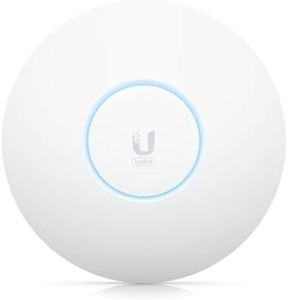
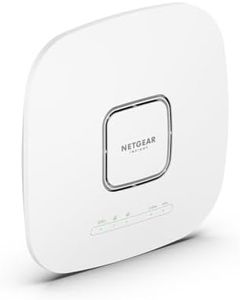
Ubiquiti UniFi U6 Enterprise Access Point | US Model | PoE Adapter not Included

Rating
8.8
Wi-Fi Standards

Most important from
81 reviews

Wi-Fi Standards
Supports Wi-Fi 6E, providing enhanced security and better throughput for demanding network needs.

The Ubiquiti UniFi U6 Enterprise is a strong choice if you're looking for a fast and reliable wireless access point to improve connectivity at home or in small offices. It supports the latest Wi-Fi standard (802.11ax, also known as Wi-Fi 6) across three frequency bands, which means it can handle multiple devices at once with good speeds—up to 10.20 Gbit/s wireless transmission. The device uses a tri-band setup that helps reduce interference and improve network performance in busy environments.

It has an internal antenna, which makes it easy to mount on ceilings without worrying about external parts, and its design is suitable for both indoor and outdoor use thanks to an IP65 rating, meaning it can resist dust and water splashes. One technical highlight is its 2.5 Gigabit Ethernet port, allowing for faster wired connections than typical access points. Security features are up to date with modern standards, and managing the device is straightforward through Ubiquiti’s UniFi software, which is popular for its user-friendly interface.

Keep in mind that the PoE (Power over Ethernet) adapter is not included, so you'll need to get one separately to power it via Ethernet cable, or use a compatible PoE switch. While it’s labeled for home use, it’s powerful enough to support more demanding setups like small businesses or crowded spaces. If you want a reliable, high-speed Wi-Fi solution that’s easy to set up and can handle multiple devices well, this access point is worth considering. Just be prepared to source the necessary power adapter if you don’t already have one.

Rating
8.8
Wi-Fi Standards

Most important from
81 reviews

Wi-Fi Standards
Supports Wi-Fi 6E, providing enhanced security and better throughput for demanding network needs.
#3

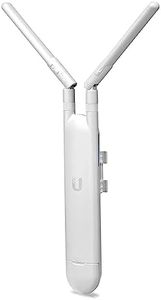
Ubiquiti Networks Unifi AC Mesh 1167Mbit/s Power over Ethernet (PoE) White

Rating
8.5
PoE Standards
Management Options

Most important from
2389 reviews

PoE Standards
Power over Ethernet simplifies installation with just one cable, eliminating messy power cords and enabling clean setups.
Management Options
While best integrated into a UniFi network controller for full management, it remains a strong standalone option for outdoor Wi-Fi needs.

The Ubiquiti Networks Unifi AC Mesh is a lightweight and compact wireless access point designed for home use, featuring dual-band Wi-Fi with 802.11ac technology. This means it can handle both 2.4 GHz and 5 GHz frequencies, offering better wireless performance and flexibility across devices. It supports Power over Ethernet (PoE) at 24 volts, which simplifies installation by carrying power and data over a single cable—ideal if you want to avoid extra power outlets.

The device uses fixed antennas, which are decent for general coverage but might not match the range of models with adjustable or external antennas. It delivers speeds up to 1167 Mbps, suitable for everyday internet browsing, streaming, and light to moderate wireless demands. Security-wise, it supports standard features expected from business-grade access points. Management is handled via Ubiquiti's UniFi Controller software, which is widely praised for being user-friendly, even for those without advanced technical skills, making it a good choice if you want easy setup and control.

The fixed antenna design limits customization for improving range or directionality, and some advanced security or enterprise features might be missing compared to higher-end models. The device is primarily suited for home or small office use rather than large enterprise environments. This access point offers a solid balance of performance and manageability for users looking to extend Wi-Fi coverage with PoE convenience, especially in home or small-scale settings.

Rating
8.5
PoE Standards
Management Options

Most important from
2389 reviews

PoE Standards
Power over Ethernet simplifies installation with just one cable, eliminating messy power cords and enabling clean setups.
Management Options
While best integrated into a UniFi network controller for full management, it remains a strong standalone option for outdoor Wi-Fi needs.

Buying Guide for the Best Wireless PoE Access Points

When choosing a wireless PoE (Power over Ethernet) access point, it's important to consider several key specifications to ensure you get the best fit for your needs. Wireless PoE access points are devices that provide Wi-Fi connectivity and receive power through an Ethernet cable, which simplifies installation and reduces the need for additional power outlets. Understanding the key specs will help you make an informed decision based on your specific requirements.
Wi-Fi StandardsWi-Fi standards determine the speed and range of your wireless network. The most common standards are 802.11n, 802.11ac, and 802.11ax. 802.11n is older and offers moderate speeds, suitable for basic internet browsing and small networks. 802.11ac provides faster speeds and better performance, ideal for streaming and larger networks. 802.11ax, also known as Wi-Fi 6, offers the highest speeds, improved efficiency, and better performance in crowded environments. Choose a standard based on your network size and the types of activities you plan to perform.
Frequency BandsWireless access points operate on different frequency bands, primarily 2.4 GHz and 5 GHz. The 2.4 GHz band offers better range but is more prone to interference, making it suitable for basic internet use and larger coverage areas. The 5 GHz band provides faster speeds and less interference, ideal for high-bandwidth activities like streaming and gaming. Some access points support both bands (dual-band), allowing you to balance range and performance. Consider your environment and usage to decide which band or combination of bands is best for you.
PoE StandardsPoE standards determine how much power can be delivered over an Ethernet cable. The common standards are PoE (IEEE 802.3af), PoE+ (IEEE 802.3at), and PoE++ (IEEE 802.3bt). PoE provides up to 15.4W, suitable for basic access points. PoE+ offers up to 30W, supporting more powerful devices with additional features. PoE++ can deliver up to 60W or 100W, ideal for high-performance access points with advanced capabilities. Choose a PoE standard based on the power requirements of your access point and any additional features you may need.
Antenna TypeThe type of antenna used in an access point affects its coverage and performance. Internal antennas are built into the device, offering a cleaner look and easier installation, suitable for most home and small office environments. External antennas can be adjusted and positioned for better signal strength and coverage, ideal for larger areas or challenging environments. Some access points offer detachable antennas, allowing you to upgrade or replace them as needed. Consider the size and layout of your space to determine which antenna type will provide the best coverage.
Number of Spatial StreamsSpatial streams refer to the number of data streams an access point can handle simultaneously, impacting its overall performance and capacity. More spatial streams allow for higher data rates and better performance, especially in environments with multiple devices. Common configurations include 2x2, 3x3, and 4x4, with higher numbers indicating more streams. For basic home use, 2x2 or 3x3 may be sufficient, while larger networks or high-traffic environments may benefit from 4x4 or higher. Assess your network's device density and performance needs to choose the right configuration.
Security FeaturesSecurity features protect your network from unauthorized access and potential threats. Common security protocols include WPA2 and WPA3, with WPA3 offering enhanced security and encryption. Additional features like guest networks, VLAN support, and advanced firewall settings can provide further protection and network management capabilities. Consider the sensitivity of the data on your network and the level of security you require to choose an access point with appropriate security features.
Management OptionsManagement options determine how you can configure and monitor your access point. Basic models may offer web-based interfaces for simple setup and management, suitable for home users. More advanced models provide centralized management through software or cloud-based platforms, ideal for businesses and larger networks. Features like remote access, real-time monitoring, and automated updates can simplify network management and improve performance. Consider your technical expertise and the complexity of your network to choose an access point with suitable management options.

FAQ