We Use CookiesWe use cookies to enhance the security, performance, functionality and for analytical and promotional activities. By continuing to browse this site you are agreeing to our privacy policy

10 Best Speaker Amplifiers 2026 in the United States
How do we rank products for you?

Our technology thoroughly searches through the online shopping world, reviewing hundreds of sites. We then process and analyze this information, updating in real-time to bring you the latest top-rated products. This way, you always get the best and most current options available.

headphones-stars

Our Top Picks

#1

Winner

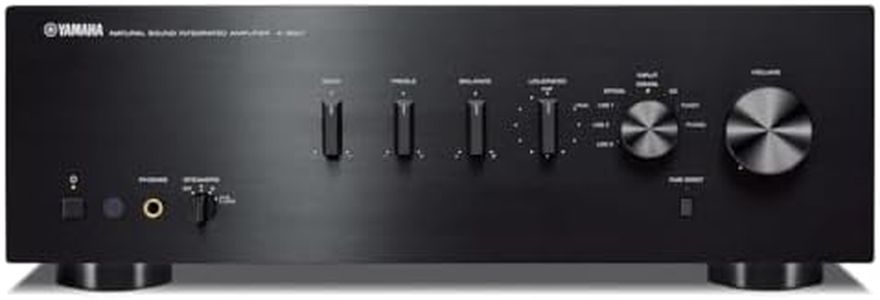
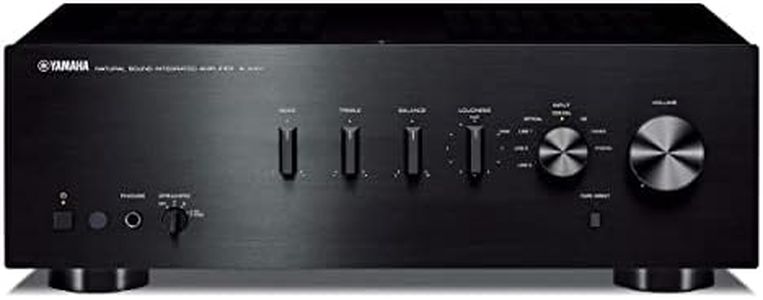
YAMAHA A-S501BL Natural Sound Integrated Stereo Amplifier (Black)

Rating
10.0
Chosen by1,291
Power Output (Wattage)
Total Harmonic Distortion (THD)
Signal-to-Noise Ratio (SNR)

Most important from
1244 reviews

Power Output (Wattage)
Delivers fantastic, clear sound that perfectly powers both turntables and subwoofers with plenty of punch.
Total Harmonic Distortion (THD)
Offers stunning, neutral sound with well-defined mids and highs without harshness, and bass that is full yet clean.
Signal-to-Noise Ratio (SNR)
The amplifier reveals new dimensions in music detail, opening a broader soundstage even with older speakers.
Connectivity Options
Internal pre-amp for turntables eliminates the need for external phono stages, simplifying vinyl playback.

The Yamaha A-S501BL is a solid choice if you're looking for a reliable integrated stereo amplifier. It offers 85 watts per channel, which is enough power to drive most home speakers with clear, strong sound. The low total harmonic distortion (0.019%) means the audio stays clean without unwanted fuzz or noise, and the frequency response covering the full 20 Hz to 20 kHz range ensures you hear both deep bass and crisp highs. It has a good signal-to-noise ratio, so background hiss is minimal, helping your music sound more detailed.

One standout feature is its variety of inputs: it includes gold-plated digital coaxial and optical inputs for connecting modern digital devices, plus analog inputs including a dedicated Phono input if you want to hook up a turntable. The option to switch between two pairs of speakers (A, B, or both) adds versatility for different room setups. It also has an energy-saving auto standby mode, although the standby power draw is very low at 0.5 watts.

This model has been around since 2014, so it lacks the wireless connectivity features like Bluetooth or Wi-Fi found in newer amplifiers, which might be a drawback if you want easy streaming from phones or tablets. Additionally, it’s a bit heavy and large, so consider space if that matters. The Yamaha A-S501BL suits users who want a dependable, high-quality amplifier with flexible wired connections and good sound performance but don’t need the latest wireless features.

Rating
10.0
Chosen by1,291
Power Output (Wattage)
Total Harmonic Distortion (THD)
Signal-to-Noise Ratio (SNR)

Most important from
1244 reviews

Power Output (Wattage)
Delivers fantastic, clear sound that perfectly powers both turntables and subwoofers with plenty of punch.
Total Harmonic Distortion (THD)
Offers stunning, neutral sound with well-defined mids and highs without harshness, and bass that is full yet clean.
Signal-to-Noise Ratio (SNR)
The amplifier reveals new dimensions in music detail, opening a broader soundstage even with older speakers.
Connectivity Options
Internal pre-amp for turntables eliminates the need for external phono stages, simplifying vinyl playback.
#2

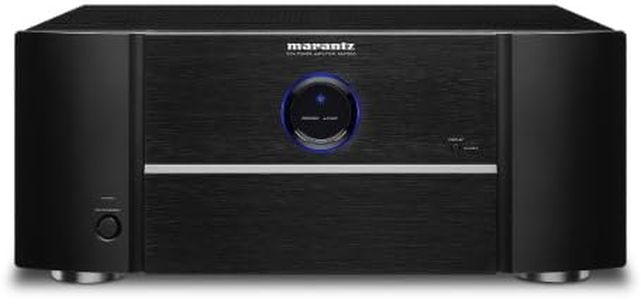
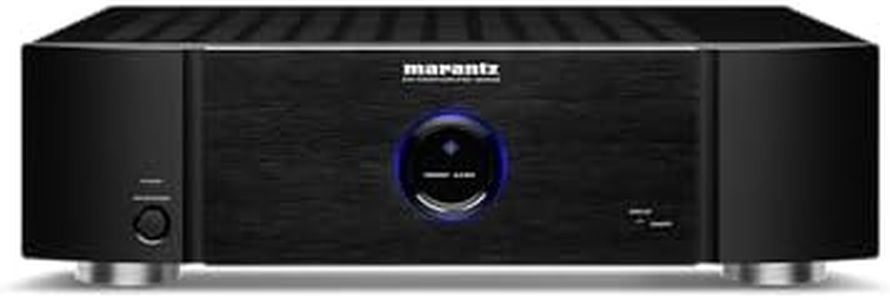
Marantz Model 50 Pure Analog (70 Watt x 2) Stereo Integrated Amplifier (Black)

Rating
9.7
Power Output (Wattage)
Connectivity Options

Most important from
13 reviews

Power Output (Wattage)
The Model 50's 70 watts per channel push speakers without an issue, even in medium-sized rooms.
Connectivity Options
Multiple analog inputs and high-quality binding posts for speakers make it a versatile performer.

The Marantz Model 50 Pure Analog Stereo Integrated Amplifier delivers a solid 70 watts per channel, which should be ample for most home audio setups. Its power output means it can handle a range of speakers without struggling. With a sleek black design and weighing in at 31.3 pounds, it's a sturdy and stylish addition to any audio enthusiast's collection, though it might be a bit bulky for those with limited space.

The dimensions are 16.96 x 17.4 x 5.11 inches, which is something to consider when planning your setup. Despite its weight and size, the unit is well-reviewed, scoring 4.6 out of 5 stars from users, indicating satisfaction with its performance and build quality. The amplifier ranks fairly well among audio component amplifiers, positioned at #416, pointing to a niche but appreciative market.

In essence, the Marantz Model 50 appears to be a robust and well-loved choice for dedicated home audio setups. Potential buyers might need to dig deeper into its specifications to ensure it meets their specific needs, particularly regarding connectivity and sound fidelity metrics.

Rating
9.7
Power Output (Wattage)
Connectivity Options

Most important from
13 reviews

Power Output (Wattage)
The Model 50's 70 watts per channel push speakers without an issue, even in medium-sized rooms.
Connectivity Options
Multiple analog inputs and high-quality binding posts for speakers make it a versatile performer.
#3

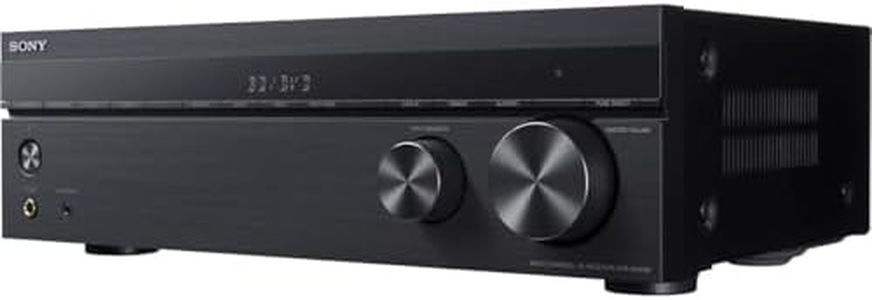
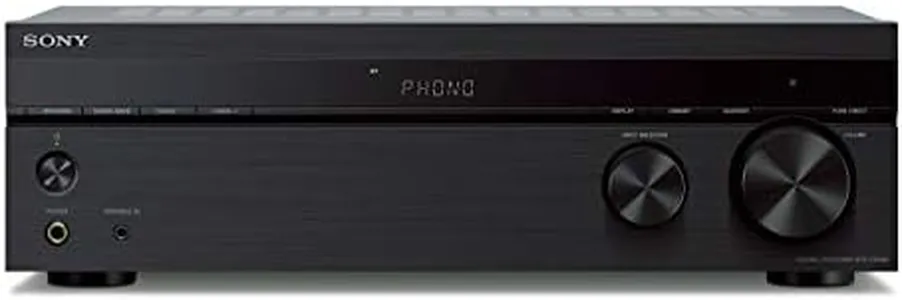
Sony STRDH590 5.2 Channel Surround Sound Home Theater Receiver: 4K HDR AV Receiver with Bluetooth,Black

Rating
9.4
Connectivity Options

Most important from
5908 reviews

Connectivity Options
Bluetooth works flawlessly, and the transformation of surrounding sound from 2 channels is excellent.

The Sony STRDH590 is a versatile home theater receiver that brings cinematic sound to your living room. With 725W power output and support for 5.2 channel surround sound, this amplifier ensures a robust audio experience. The impedance rating is 6 ohms, suitable for a variety of home speaker setups. While the Total Harmonic Distortion (THD) at 0.9% isn't the lowest, it's acceptable for most casual listeners.

Connectivity options are solid with Bluetooth, HDMI, and multiple RCA and digital audio inputs, making it easy to connect to various devices like TVs and speakers. The frequency response is not explicitly detailed, but the 4K HDR compatibility and HDCP 2.2 support suggest it can handle high-quality audio and video signals effectively. The virtual front surround feature (S Force PRO) is handy for those with limited speaker setups, providing a surround sound experience with just two speakers.

Bluetooth standby and smart connectivity options add convenience, though some users might find the setup and manual troubleshooting a bit complex. This receiver is ideal for a home theater enthusiast looking for a well-rounded receiver with modern connectivity options and solid performance.

Rating
9.4
Connectivity Options

Most important from
5908 reviews

Connectivity Options
Bluetooth works flawlessly, and the transformation of surrounding sound from 2 channels is excellent.

Buying Guide for the Best Speaker Amplifiers

Choosing the right speaker amplifier can significantly enhance your audio experience, whether you're setting up a home theater, a professional sound system, or just looking to improve your music listening setup. The key is to understand the specifications that matter most and how they align with your needs. Here are the main specs to consider when selecting a speaker amplifier and how to navigate them.
Power Output (Wattage)Power output, measured in watts, indicates how much power the amplifier can deliver to the speakers. This is crucial because it affects the volume and clarity of the sound. Generally, higher wattage means louder and clearer sound, but it also depends on the efficiency of your speakers. For small rooms or casual listening, 20-50 watts per channel might be sufficient. For larger rooms or more demanding audio setups, you might need 100 watts or more per channel. Consider your room size and listening habits to determine the right power output for you.
ImpedanceImpedance, measured in ohms, refers to the resistance the amplifier will face from the speakers. Matching the amplifier's impedance with your speakers is important to ensure optimal performance and avoid damage. Most home audio speakers have an impedance of 4, 6, or 8 ohms. Ensure that the amplifier you choose can handle the impedance of your speakers. If you have 8-ohm speakers, an amplifier rated for 6-8 ohms will work well. For 4-ohm speakers, make sure the amplifier can handle lower impedance.
Total Harmonic Distortion (THD)Total Harmonic Distortion (THD) measures the amount of distortion the amplifier introduces to the audio signal. Lower THD values mean cleaner and more accurate sound reproduction. THD is usually expressed as a percentage, with values below 0.1% considered excellent for high-fidelity audio. If you are an audiophile or require high-quality sound for professional use, aim for an amplifier with a THD of 0.1% or lower. For casual listening, slightly higher THD values might be acceptable.
Signal-to-Noise Ratio (SNR)The Signal-to-Noise Ratio (SNR) indicates how much background noise is present in the amplifier's output compared to the actual audio signal. A higher SNR means less background noise and clearer sound. SNR is measured in decibels (dB), and values above 90 dB are generally considered good. If you are looking for high-quality audio, especially in quiet environments, choose an amplifier with a higher SNR. For everyday use, an SNR of 80-90 dB might be sufficient.
Connectivity OptionsConnectivity options determine how you can connect your amplifier to other devices, such as speakers, audio sources, and other components. Common connections include RCA, XLR, optical, and Bluetooth. Consider what devices you plan to connect and ensure the amplifier has the appropriate inputs and outputs. For a simple home setup, RCA and Bluetooth might be enough. For more complex or professional setups, you might need XLR or optical connections. Think about your current and future needs when evaluating connectivity options.
Frequency ResponseFrequency response indicates the range of frequencies the amplifier can reproduce, typically measured in Hertz (Hz). A wider frequency response means the amplifier can handle a broader range of sounds, from deep bass to high treble. Most amplifiers cover the standard human hearing range of 20 Hz to 20 kHz. If you are a music enthusiast or require precise audio reproduction, look for an amplifier with a flat and wide frequency response. For general use, standard frequency response ranges are usually sufficient.

FAQ