We Use CookiesWe use cookies to enhance the security, performance, functionality and for analytical and promotional activities. By continuing to browse this site you are agreeing to our privacy policy

10 Best Inverter Chargers 2026 in the United States
How do we rank products for you?

Our technology thoroughly searches through the online shopping world, reviewing hundreds of sites. We then process and analyze this information, updating in real-time to bring you the latest top-rated products. This way, you always get the best and most current options available.

headphones-stars

Our Top Picks

#1

Winner

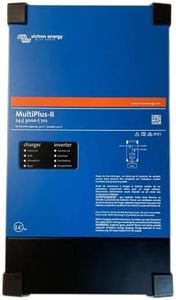
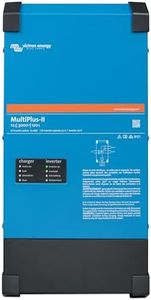
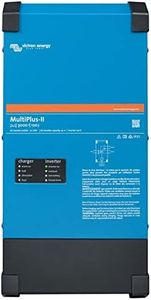
Victron Energy MultiPlus-II Pure Sine Wave Inverter Charger, UL-Certified, 24/3000/70-50 120V

Rating
10.0
Chosen by1,180
Efficiency

Most important from
4 reviews

Efficiency
Power management features effectively optimize battery life and system efficiency, supporting complex setups like Tesla battery integrations.

The Victron Energy MultiPlus-II Pure Sine Wave Inverter Charger is a solid choice for anyone needing a reliable and efficient inverter charger, especially in RVs, boats, or off-grid solar systems using a 24V battery setup. It delivers a strong 3000-watt continuous output, which is enough to power most household appliances and tools. Its pure sine wave output means it provides clean and stable power, safe for sensitive electronics.

This unit includes advanced features like PowerControl and PowerAssist, which help manage power use efficiently and optimize battery life by adjusting charging and load demands. It supports external current sensing, allowing better self-consumption of solar or generator power. Protection features such as built-in anti-islanding enhance safety during grid-tied operation.

One consideration is its weight—at over 48 pounds, it’s not the lightest option, so installation requires some effort. Also, while it has a solid input voltage of 24V and charging current suitable for larger battery banks, its price and complexity might be more than needed for casual users with smaller systems. Those looking for a high-quality, feature-rich inverter charger with robust safety certifications will find this model a dependable choice.

Rating
10.0
Chosen by1,180
Efficiency

Most important from
4 reviews

Efficiency
Power management features effectively optimize battery life and system efficiency, supporting complex setups like Tesla battery integrations.
#2

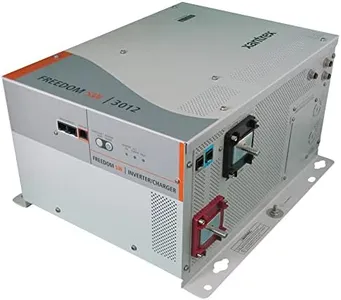
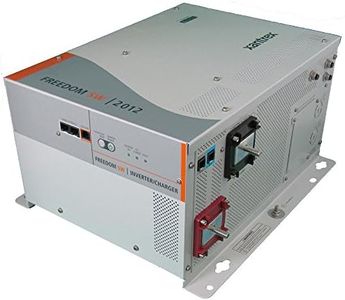
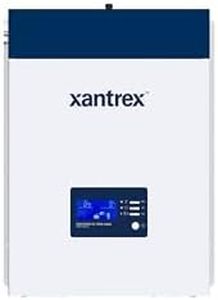
Xantrex Freedom SW3012 12V 3000W Inverter/Charger [815-3012]

The Xantrex Freedom SW3012 is a robust inverter/charger designed for users needing reliable power conversion and battery charging. With a continuous output of 3000 watts and a true sine wave output, it’s an excellent choice for sensitive electronics, ensuring smooth operation without distortion. Its compatibility with various battery types, including LiFePO4 and AGM, makes it versatile for different setups.

One standout feature is its built-in transfer switch, which allows for quick transitions from grid or generator power to battery power in under 10 milliseconds. This ensures minimal disruption to connected devices, which is beneficial for those in critical applications such as marine or off-grid usage. Additionally, the wide operating temperature range ensures functionality in diverse climates, while the temperature-compensated charging helps maintain battery health.

However, there are a few drawbacks to consider. The unit is quite heavy at nearly 73.7 lbs, which could be challenging for installation in certain locations. Also, while it offers essential safety features and meets various certifications, some users might find that installation requires a bit of technical know-how, particularly those who are not very tech-savvy.

#3

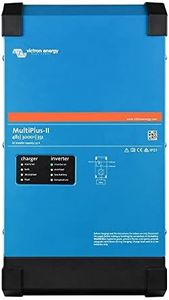
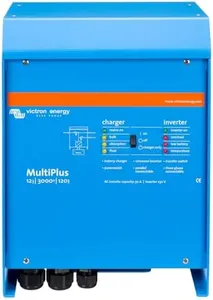
Victron Energy MultiPlus-II - Power Inverter - Pure Sine Wave Inverter Charger for 35 amp Battery - with PowerAssist Technology - UL Certified - 3000VA 48-Volt

The Victron Energy MultiPlus-II is a strong choice if you're looking for a reliable inverter charger for RVs, boats, or off-grid setups. It provides 3000 watts of power at 48 volts, which is suitable for running most household appliances or tools. One of its key strengths is the pure sine wave output, meaning it delivers clean, stable electricity that’s safe for sensitive electronics. It also includes a smart feature called Power Assist, which helps prevent overloading a limited power source like a generator by supplementing extra power from the battery when needed. Another advantage is its quick switchover time of just 20 milliseconds, so your devices won’t lose power during an outage.

You can also connect up to six units in parallel for bigger power demands or even set up three-phase power for more complex systems. The unit is UL-certified and includes built-in protections like anti-islanding, which helps keep the device safe and compliant with grid requirements. On the downside, it’s fairly heavy at over 50 pounds, which might be a consideration for some users. While the charging current specs are good for its size, users needing very high charging speeds might look to other options.

This inverter charger suits professional and advanced users who want dependable off-grid power with flexible installation options, though casual users might find it more complex than simpler models.

Buying Guide for the Best Inverter Chargers

Choosing the right inverter-charger can be a bit overwhelming, but with the right knowledge, you can make an informed decision that best suits your needs. An inverter-charger is a device that combines an inverter and a battery charger into one unit. It converts DC power from batteries into AC power to run household appliances and also charges the batteries when connected to an AC power source. Here are some key specifications to consider when selecting an inverter-charger.
Power Output (Wattage)Power output, measured in watts (W), indicates the maximum amount of power the inverter-charger can supply to your appliances. This is crucial because it determines what and how many devices you can run simultaneously. Inverter-chargers typically range from a few hundred watts to several thousand watts. For light usage, such as charging small electronics, a lower wattage (up to 1000W) may suffice. For running larger appliances like refrigerators or power tools, you will need a higher wattage (2000W and above). Assess your power needs by listing the devices you plan to use and their wattage requirements.
Battery VoltageBattery voltage refers to the voltage of the battery bank that the inverter-charger will be connected to. Common battery voltages are 12V, 24V, and 48V. The importance of this spec lies in compatibility with your existing or planned battery setup. A 12V system is typically used for smaller setups, while 24V and 48V systems are more efficient and suitable for larger setups. Choose the battery voltage that matches your battery bank and meets your power needs efficiently.
Charging CurrentCharging current, measured in amperes (A), indicates how quickly the inverter-charger can charge your batteries. This is important for ensuring that your batteries are charged efficiently and within a reasonable time frame. Lower charging currents (up to 30A) are suitable for smaller battery banks, while higher currents (50A and above) are better for larger battery banks. Consider the capacity of your battery bank and how quickly you need it to be recharged when selecting the charging current.
Waveform TypeThe waveform type refers to the shape of the AC power output produced by the inverter. The two main types are modified sine wave and pure sine wave. Pure sine wave inverters produce a cleaner and more stable power output, which is important for sensitive electronics and appliances. Modified sine wave inverters are less expensive but may not be suitable for all devices. If you plan to power sensitive equipment like computers or medical devices, opt for a pure sine wave inverter. For less sensitive devices, a modified sine wave inverter may be sufficient.
EfficiencyEfficiency indicates how well the inverter-charger converts DC power to AC power and vice versa. Higher efficiency means less energy is lost during the conversion process, which is important for maximizing the use of your battery power. Efficiency is usually expressed as a percentage, with higher values (90% and above) being better. Choose an inverter-charger with high efficiency to ensure that you get the most out of your battery power.
Input Voltage RangeInput voltage range refers to the range of voltages that the inverter-charger can accept from an AC power source for charging the batteries. This is important for ensuring compatibility with different power sources, such as generators or shore power. A wider input voltage range provides more flexibility in the sources you can use to charge your batteries. Consider the types of power sources you will be using and ensure the inverter-charger can accommodate them.
Protection FeaturesProtection features include safeguards like over-voltage protection, under-voltage protection, over-temperature protection, and short-circuit protection. These features are important for ensuring the safety and longevity of both the inverter-charger and your batteries. Look for an inverter-charger with comprehensive protection features to prevent damage and ensure reliable operation.

FAQ