We Use CookiesWe use cookies to enhance the security, performance, functionality and for analytical and promotional activities. By continuing to browse this site you are agreeing to our privacy policy

10 Best Gps Fish Finders 2026 in the United States
How do we rank products for you?

Our technology thoroughly searches through the online shopping world, reviewing hundreds of sites. We then process and analyze this information, updating in real-time to bring you the latest top-rated products. This way, you always get the best and most current options available.

headphones-stars

Our Top Picks

#1

Winner

Garmin ECHOMAP UHD2 94sv with GT56 Transducer, 9" Touchscreen Chartplotter, Garmin Navionics+ U.S. Coastal

Rating
10.0
Chosen by1,285
Display Size and Resolution
Sonar Technology
Connectivity and Networking

Most important from
227 reviews

Display Size and Resolution
Side imaging resolution is significantly improved, allowing better differentiation of bottom structures.
Sonar Technology
Sonar and charts work great, providing clarity on underwater visuals.
Connectivity and Networking
Works well right out of the box, but even better once linked to the app.

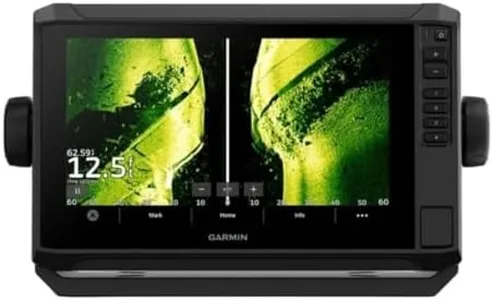
The Garmin ECHOMAP UHD2 94sv is a solid choice for anglers and boating enthusiasts looking for a reliable GPS fish finder. Its 9-inch touchscreen display is a standout feature, offering excellent visibility and clarity even in bright sunlight, making it easy to read while out on the water. The included GT56-TM transducer enhances its sonar capabilities, providing traditional, ClearVü, and SideVü scanning technologies that help locate fish effectively. With built-in Garmin Navionics+ coastal charts, users can navigate with confidence, benefiting from detailed maps that cover U.S. coastal waters.

One of the key strengths of the ECHOMAP UHD2 is its connectivity options. The built-in Wi-Fi allows for easy sharing of sonar data, waypoints, and routes with another ECHOMAP UHD2 unit. This feature can be particularly useful for fishing teams or groups. Additionally, it wirelessly connects to the Garmin Force trolling motor, enabling advanced control and navigation, which can enhance the fishing experience significantly.

The Garmin ECHOMAP UHD2 94sv is an impressive GPS fish finder that excels in display quality, sonar technology, and connectivity features, making it a great fit for serious anglers and boaters.

Rating
10.0
Chosen by1,285
Display Size and Resolution
Sonar Technology
Connectivity and Networking

Most important from
227 reviews

Display Size and Resolution
Side imaging resolution is significantly improved, allowing better differentiation of bottom structures.
Sonar Technology
Sonar and charts work great, providing clarity on underwater visuals.
Connectivity and Networking
Works well right out of the box, but even better once linked to the app.
#2

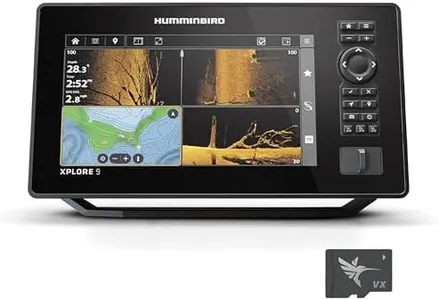
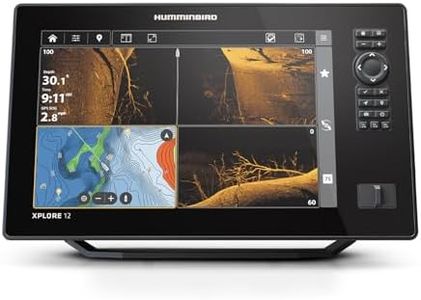
Humminbird XPLORE 12 GPS Fish Finder with Transducer, MEGA Side Imaging+ & HD Touchscreen

Rating
10.0
Display Size and Resolution
Connectivity and Networking

Most important from
64 reviews

Display Size and Resolution
The bright, clear 12-inch screen performs exceptionally well even in full sunlight, making underwater details easy to see.
Connectivity and Networking
Full NMEA 2000 integration provides strong connectivity but excludes compatibility with older sensors, which can be frustrating.

The Humminbird XPLORE 12 is a solid choice for anglers who want a powerful and easy-to-use fish finder with advanced features. Its 12-inch HD touchscreen offers a clear and bright display, making it simple to see underwater details and navigate menus either by touch or keypad. The standout feature is its premium sonar technology, including MEGA Side Imaging+ and MEGA Down Imaging+, which provide wide-ranging views up to 200 feet on each side and below, helping you spot fish and underwater structures with high detail. The Dual Spectrum CHIRP sonar adds flexibility for both broad and focused scanning, which is great for different fishing conditions.

For navigation, it includes a built-in GPS with detailed maps for over 10,000 lakes, plus extra map cards covering US and Canadian waters, and compatibility with popular Navionics charts. This helps you track your spots and routes accurately. The real-time mapping feature, AutoChart Live, lets you create custom depth and bottom maps while you fish, which is a useful tool for repeated visits to your favorite locations. Connectivity is strong with Ethernet, Bluetooth, and NMEA 2000 support, allowing integration with other devices like Minn Kota trolling motors.

The unit is battery-powered, which offers portability but may require monitoring battery life on longer trips. Weighing over 7 kg and designed for tabletop mounting, it’s a bit bulky compared to smaller models, so it may fit best on larger boats. This model suits anglers looking for a feature-rich fish finder with excellent sonar and mapping, particularly if you fish in varied freshwater and coastal environments and value connectivity with other boating gear. The two-year warranty also adds peace of mind.

Rating
10.0
Display Size and Resolution
Connectivity and Networking

Most important from
64 reviews

Display Size and Resolution
The bright, clear 12-inch screen performs exceptionally well even in full sunlight, making underwater details easy to see.
Connectivity and Networking
Full NMEA 2000 integration provides strong connectivity but excludes compatibility with older sensors, which can be frustrating.
#3

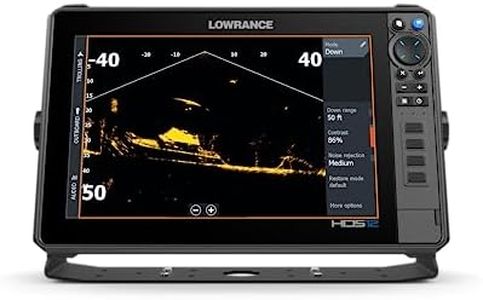
Lowrance HDS PRO 12 FishFinder/ Chartplotter with Smartphone Integration, Preloaded C-MAP DISCOVER OnBoard Charts, ActiveImaging HD 3-in-1 Transducer, 12-inch SolarMax Display, Black, 000-15987-001

Rating
9.7
Display Size and Resolution
Sonar Technology
GPS Functionality

Most important from
38 reviews

Display Size and Resolution
The large, bright touchscreen offers sharp visuals that remain clear even in direct sunlight and at wide viewing angles.
Sonar Technology
Ultra-high-definition sonar imaging delivers incredibly detailed underwater views, making it easier to spot fish and structures with simultaneous side and downscan displays.
GPS Functionality
The GPS functionality is reliable and precise, with preloaded worldwide basemaps and the ability to upgrade to detailed charts or create live maps on the water.
Transducer Type
The 3-in-1 transducer and Active Imaging technology provide versatility across various fishing environments and species.
Connectivity and Networking
Connectivity options like Bluetooth and Wi-Fi enable seamless smartphone integration for remote control and real-time notifications.

The Lowrance HDS PRO 12 Inch Fish Finder/Chart Plotter is a solid choice for anglers who want a large, clear display combined with advanced sonar and GPS capabilities. Its 12-inch SolarMAX HD touchscreen offers bright, sharp visuals that are easy to see even at sharp angles or under polarized sunglasses, which is great for sunny days on the water. The device uses ultra-high-definition Active Imaging HD sonar technology, providing detailed underwater views through CHIRP, SideScan, and DownScan imaging, helping you spot fish and underwater structures more clearly. The included 3-in-1 transducer supports these imaging features and is versatile for various fishing conditions.

GPS functionality is strong, with a worldwide basemap and options to upgrade to detailed charts like C-MAP or Navionics, plus live mapping capability with C-MAP Genesis Live. This helps you track your location precisely and save your favorite fishing spots. The system also integrates well with other fishing accessories such as Power-Pole anchors, trolling motors, and autopilot systems, controllable via touchscreen or smartphone, which adds convenience and flexibility. Connectivity options include wireless and Bluetooth, allowing for smartphone notifications right on the display.

The unit weighs over 6 kg, which is typical for a device of this size but could be a consideration for smaller boats. This model is well-suited for serious fishing enthusiasts who want a feature-rich fish finder with excellent imaging and GPS, though beginners might need some time to learn all its functions and consider the extra costs for certain advanced features.

Rating
9.7
Display Size and Resolution
Sonar Technology
GPS Functionality

Most important from
38 reviews

Display Size and Resolution
The large, bright touchscreen offers sharp visuals that remain clear even in direct sunlight and at wide viewing angles.
Sonar Technology
Ultra-high-definition sonar imaging delivers incredibly detailed underwater views, making it easier to spot fish and structures with simultaneous side and downscan displays.
GPS Functionality
The GPS functionality is reliable and precise, with preloaded worldwide basemaps and the ability to upgrade to detailed charts or create live maps on the water.
Transducer Type
The 3-in-1 transducer and Active Imaging technology provide versatility across various fishing environments and species.
Connectivity and Networking
Connectivity options like Bluetooth and Wi-Fi enable seamless smartphone integration for remote control and real-time notifications.

Buying Guide for the Best Gps Fish Finders

When it comes to choosing a GPS fish finder, it's important to understand that this device combines two essential tools for fishing: a GPS for navigation and a fish finder for locating fish underwater. The right GPS fish finder can significantly enhance your fishing experience by helping you find the best fishing spots and navigate waters safely. To make an informed decision, you need to consider several key specifications that will determine how well the device meets your needs.
Display Size and ResolutionThe display size and resolution of a GPS fish finder are crucial because they determine how easily you can read the information on the screen. A larger display with higher resolution will provide clearer and more detailed images, which is especially important in bright sunlight or rough waters. Display sizes typically range from 4 inches to over 12 inches. If you fish in open waters or need to see detailed maps and fish arches, a larger screen with high resolution is ideal. For casual or occasional fishing in smaller bodies of water, a smaller screen may suffice.
Sonar TechnologySonar technology is what allows the fish finder to detect fish and underwater structures. There are different types of sonar, including traditional, CHIRP, and side imaging. Traditional sonar provides basic depth and fish information, while CHIRP sonar offers more detailed and accurate readings by using a range of frequencies. Side imaging sonar gives a wide view of the area around your boat, making it easier to spot fish and structures. If you need detailed and accurate information, CHIRP and side imaging are the best options. For basic needs, traditional sonar may be sufficient.
GPS FunctionalityThe GPS functionality in a fish finder helps you navigate and mark fishing spots. Key features to look for include the ability to create and follow waypoints, track your route, and access preloaded maps. Some models also offer advanced mapping options and the ability to download additional maps. If you fish in unfamiliar waters or need precise navigation, a fish finder with advanced GPS features and detailed maps is essential. For more familiar or smaller fishing areas, basic GPS functionality may be adequate.
Power and FrequencyThe power and frequency of a GPS fish finder affect its performance in different water conditions. Higher power (measured in watts) allows the device to send stronger sonar signals, which is useful for deeper waters. Frequency, measured in kHz, determines the level of detail and depth range. Lower frequencies (50-83 kHz) are better for deep water, while higher frequencies (200-800 kHz) provide more detail in shallow water. Choose a fish finder with the appropriate power and frequency based on the type of water you fish in most often.
Transducer TypeThe transducer is the part of the fish finder that sends and receives sonar signals. Different transducers are designed for different mounting options, such as transom, in-hull, or through-hull. The type of transducer you need depends on your boat and fishing style. Transom-mounted transducers are easy to install and suitable for most boats, while through-hull transducers provide better performance for larger boats and rough waters. In-hull transducers are a good option if you want to avoid drilling holes in your boat.
Connectivity and NetworkingConnectivity and networking features allow your GPS fish finder to connect with other devices and share data. This can include Bluetooth, Wi-Fi, and NMEA 2000 compatibility. These features enable you to sync your fish finder with smartphones, tablets, and other marine electronics, providing a more integrated and convenient fishing experience. If you use multiple devices or want to share data with other anglers, look for a fish finder with robust connectivity options. For simpler setups, basic connectivity may be enough.

FAQ