We Use CookiesWe use cookies to enhance the security, performance, functionality and for analytical and promotional activities. By continuing to browse this site you are agreeing to our privacy policy

10 Best Dynamic Microphones For Podcast 2026 in the United States
How do we rank products for you?

Our technology thoroughly searches through the online shopping world, reviewing hundreds of sites. We then process and analyze this information, updating in real-time to bring you the latest top-rated products. This way, you always get the best and most current options available.

headphones-stars

Our Top Picks

#1

Winner

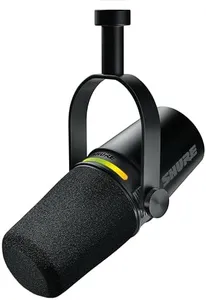
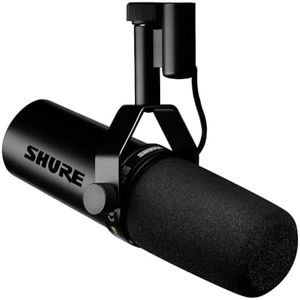
Shure SM7dB Dynamic Vocal Microphone with Built-in Preamp – Studio Mic for Streaming, Podcasting, and Recording – Smooth Sound, Wide Frequency Range, Rugged Build, Windscreen Included, XLR, Black

Rating
10.0
Chosen by1,109
Frequency Response
Build Quality

Most important from
855 reviews

Frequency Response
The newer SM7dB sounds great, with a low boost and tapered high end that is flattering.
Build Quality
It's a hefty microphone, but every bit of the weight is intentional, ensuring top-notch build quality.

The Shure SM7dB Dynamic Vocal Microphone is an impressive option for podcasters and content creators seeking high-quality sound. One of its standout features is the built-in preamp that offers a clean boost, making it easy to capture clear vocals even in noisy environments. The microphone's frequency response from 50 to 20,000 Hz ensures that both low and high sounds are well represented, allowing for natural audio that many users appreciate.

The cardioid polar pattern is another major advantage, as it effectively isolates the speaker’s voice while minimizing background noise. This makes it ideal for home studios or less-than-perfect recording spaces. Additionally, the microphone offers multiple sound signatures to cater to different voices and instruments, allowing for customization of tone, which can be a significant plus during recordings.

However, there are some points to consider. The SM7dB requires a compatible audio interface or mixer that can provide plus 48V phantom power, which may add to your setup cost. While the preamp is a handy feature, some users may prefer the original output of the SM7B, and switching back can be a bit cumbersome. Furthermore, the microphone is relatively heavy at 2.7 pounds, which could be a concern for those with portable setups.

Rating
10.0
Chosen by1,109
Frequency Response
Build Quality

Most important from
855 reviews

Frequency Response
The newer SM7dB sounds great, with a low boost and tapered high end that is flattering.
Build Quality
It's a hefty microphone, but every bit of the weight is intentional, ensuring top-notch build quality.
#2

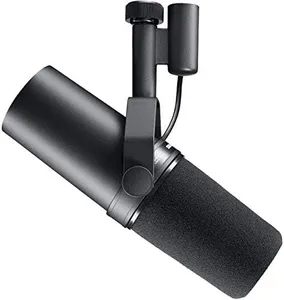
Shure SM7B Vocal Dynamic Microphone – XLR Studio Mic for Podcasting, Recording, Broadcasting, Streaming & Gaming – Smooth, Warm Sound, Rugged Build, Detachable Windscreen, Wide Frequency Range, Black

Rating
10.0
Frequency Response
Build Quality

Most important from
12056 reviews

Frequency Response
The low boost and tapered high end is flattering, unlike some condenser microphones that will rip your head off with the boost in high frequencies.
Build Quality
Build quality... state of the art. It's a hefty microphone, but every bit of the weight is intentional.

The Shure SM7B microphone is a highly respected choice among podcasters, streamers, and vocal recording professionals. Its unidirectional polar pattern effectively captures sound from the front while minimizing background noise, which is great for clear and focused recordings. The microphone's wide-range frequency response ensures clean and natural sound reproduction, making it suitable for both speech and music.

This model is known for its rugged build quality, featuring a metal construction that promises durability and longevity. It also includes a detachable windscreen to reduce breathiness and plosives, further enhancing sound clarity. The XLR connectivity is ideal for those seeking professional-level sound control, though it does require an audio interface to connect to a computer.

One potential downside is that the microphone needs a significant amount of gain (at least 60dB), which might necessitate an additional preamp for optimal performance. Additionally, it is relatively heavy at 2.7 pounds, which might be a consideration for some setups. Despite these minor drawbacks, the Shure SM7B remains a top choice for high-quality vocal recordings and is trusted by many leading podcasters and broadcasters.

Rating
10.0
Frequency Response
Build Quality

Most important from
12056 reviews

Frequency Response
The low boost and tapered high end is flattering, unlike some condenser microphones that will rip your head off with the boost in high frequencies.
Build Quality
Build quality... state of the art. It's a hefty microphone, but every bit of the weight is intentional.
#3

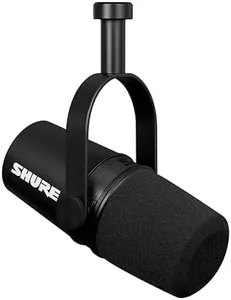
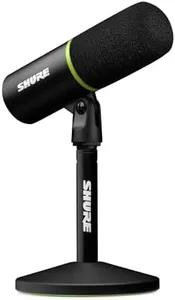
Shure MV7+ Podcast Dynamic Microphone – OBS Certified, Enhanced Audio, LED Panel, USB-C & XLR Outputs, Auto Level Mode, Digital Pop Filter, Reverb Effects – for Podcasting, Streaming, Recording, Black

Rating
9.7
Frequency Response
Polar Pattern
Build Quality

Most important from
884 reviews

Frequency Response
The microphone's frequency response is tailored for speech, ensuring your voice sounds clear and natural.
Polar Pattern
The cardioid polar pattern effectively reduces background noise, making it ideal for noisy environments or isolating a single sound source.
Build Quality
Built with top-notch quality, the Shure MV7+ feels sturdy and premium, ensuring long-term durability.
Connectivity
This microphone is perfect for podcasting, streaming, and voiceovers, with its outstanding sound quality and versatile connectivity options.

The Shure MV7+ Podcast Dynamic Microphone stands out as a solid choice for podcasters and streamers, delivering excellent audio quality thanks to its unidirectional polar pattern and advanced noise-cancellation features. Its frequency response and sensitivity are tailored for capturing clear vocals, making it ideal for spoken word content. The microphone also boasts dual connectivity options with USB-C and XLR outputs, offering flexibility for various recording setups, whether you're using a computer or a more complex audio interface.

One of the notable strengths of the MV7+ is its built-in DSP technology, which includes a real-time denoiser and an improved auto-level mode, ensuring optimal audio levels regardless of the environment. This is particularly beneficial for those who may not have a soundproof studio. The quick mute function via the LED touch panel adds convenience, allowing users to easily manage their audio without fumbling with additional equipment.

The microphone’s LED touch panel is another appealing feature, providing visual feedback and customization options; however, some users might find it less practical in low-light settings. Additionally, the onboard reverb effects can enhance recordings, but may not be necessary for all users and can be seen as a gimmick by some.

On the downside, while the MV7+ is designed for versatility, it comes with a weight of nearly 2 pounds, which may be a bit cumbersome for casual users or those who prefer lighter microphones. Also, the reliance on the Motiv Mix app for certain configurations might deter users who are looking for a more straightforward plug-and-play experience.

Rating
9.7
Frequency Response
Polar Pattern
Build Quality

Most important from
884 reviews

Frequency Response
The microphone's frequency response is tailored for speech, ensuring your voice sounds clear and natural.
Polar Pattern
The cardioid polar pattern effectively reduces background noise, making it ideal for noisy environments or isolating a single sound source.
Build Quality
Built with top-notch quality, the Shure MV7+ feels sturdy and premium, ensuring long-term durability.
Connectivity
This microphone is perfect for podcasting, streaming, and voiceovers, with its outstanding sound quality and versatile connectivity options.

Buying Guide for the Best Dynamic Microphones For Podcast

Choosing the right dynamic microphone for your podcast is crucial to ensure high-quality audio and a professional sound. Dynamic microphones are known for their durability and ability to handle high sound pressure levels, making them a popular choice for podcasters. When selecting a dynamic microphone, consider the following key specifications to find the best fit for your needs.
Frequency ResponseFrequency response refers to the range of frequencies a microphone can pick up. This is important because it affects how your voice will sound when recorded. A wider frequency response can capture more detail and nuance in your voice. Typically, a range of 50 Hz to 15 kHz is suitable for podcasting, as it covers the essential frequencies of the human voice. If your podcast involves a lot of vocal variety or musical elements, a wider frequency response might be beneficial. For standard voice recording, a more focused range can help reduce unwanted noise.
Polar PatternThe polar pattern of a microphone describes how it picks up sound from different directions. For podcasting, a cardioid pattern is often preferred because it captures sound from the front while rejecting noise from the sides and rear. This helps to isolate your voice and reduce background noise. If you record in a controlled environment with minimal background noise, other patterns like supercardioid or hypercardioid can offer even more focused sound capture. However, for most podcasters, a cardioid pattern provides a good balance of sound isolation and ease of use.
SensitivitySensitivity measures how well a microphone converts sound into an electrical signal. This is important because it affects how much gain you need to apply to get a good recording level. Dynamic microphones typically have lower sensitivity compared to condenser microphones, which means they require more gain. For podcasting, a microphone with moderate sensitivity is usually sufficient, as it can handle a wide range of vocal volumes without distortion. If you have a softer voice, you might want a microphone with higher sensitivity to ensure your voice is captured clearly.
ImpedanceImpedance is the resistance a microphone offers to the flow of electrical current. It is important because it affects the compatibility with other audio equipment. Lower impedance (less than 600 ohms) is generally preferred for dynamic microphones used in podcasting, as it ensures better signal quality and less noise interference. When choosing a microphone, make sure its impedance matches well with your audio interface or mixer to avoid any signal loss or degradation.
Build QualityBuild quality refers to the construction and durability of the microphone. This is important because a well-built microphone will last longer and withstand the rigors of regular use. For podcasting, look for a microphone with a sturdy metal body and a robust grille to protect the internal components. A good build quality also often means better internal shock mounting, which can reduce handling noise. If you plan to travel with your microphone or use it in different locations, durability becomes even more crucial.
ConnectivityConnectivity refers to how the microphone connects to your recording equipment. Most dynamic microphones use an XLR connection, which provides a balanced signal and is standard in professional audio setups. This is important because it ensures a stable and high-quality connection. When choosing a microphone, make sure you have the necessary equipment to support XLR connections, such as an audio interface or mixer. If you prefer a simpler setup, some dynamic microphones offer USB connectivity, which can be convenient for direct connection to a computer, though it may not offer the same audio quality as XLR.

FAQ