We Use CookiesWe use cookies to enhance the security, performance, functionality and for analytical and promotional activities. By continuing to browse this site you are agreeing to our privacy policy

10 Best Compact Superzoom Cameras 2026 in the United States
How do we rank products for you?

Our technology thoroughly searches through the online shopping world, reviewing hundreds of sites. We then process and analyze this information, updating in real-time to bring you the latest top-rated products. This way, you always get the best and most current options available.

headphones-stars

Our Top Picks

#1

Winner

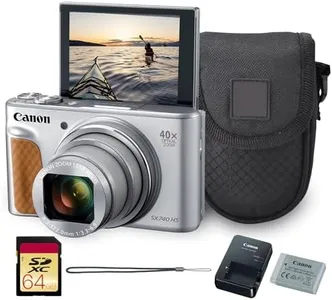
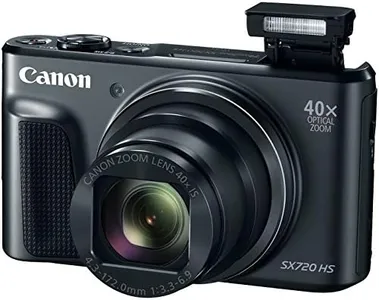
Canon PowerShot SX740 HS Digital Camera (Silver) – 20.3MP, 40x Optical Zoom, 4K UHD Video, Wi-Fi & Bluetooth, Compact Travel Point & Shoot (2956C001) + Bag + 64GB Memory Card

Rating
10.0
Chosen by1,485
Size and Weight
Connectivity

Most important from
110 reviews

Size and Weight
Lightweight and compact design fits perfectly in a purse, making it highly convenient for travel and daily use.
Connectivity
Transferring photos to smartphones is seamless and does not require Wi-Fi, enhancing user convenience.

The Canon PowerShot SX740 HS is a solid choice if you're looking for a compact camera with a powerful zoom, boasting a 40x optical zoom that lets you capture everything from wide landscapes to faraway details without losing clarity, thanks to its optical image stabilization. It features a 20.3MP 1/2.3-inch sensor, which is fairly standard for this type of camera—it delivers good image quality for casual and travel photography but won't match the low-light performance of larger sensors. The autofocus system is reliable enough for everyday shooting, making it easy to get sharp pictures.

Video capabilities stand out with 4K UHD recording and a creative 4K time-lapse mode, a nice bonus in this small package. The camera is lightweight and compact, perfect for travel or daily use, and includes Wi-Fi and Bluetooth for quick sharing and remote control via a smartphone app, which is convenient. Battery life is average and enough for a day of casual shooting, though you might want to carry a spare for longer trips.

One downside is the relatively small sensor size, which might limit image quality in dim conditions compared to more advanced cameras. Also, the battery uses a nonstandard type, so replacements might be less common. The Canon PowerShot SX740 HS suits travelers and hobbyists seeking a versatile, easy-to-use camera with strong zoom and modern video features without the bulk of larger cameras.

Rating
10.0
Chosen by1,485
Size and Weight
Connectivity

Most important from
110 reviews

Size and Weight
Lightweight and compact design fits perfectly in a purse, making it highly convenient for travel and daily use.
Connectivity
Transferring photos to smartphones is seamless and does not require Wi-Fi, enhancing user convenience.
#2

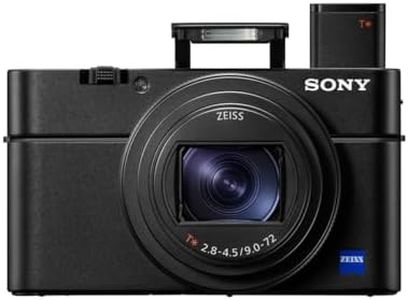
Sony RX100 VII Premium Compact Camera with 1.0-type stacked CMOS sensor (DSCRX100M7)

Rating
9.7
Zoom Range
Image Stabilization
Autofocus System

Most important from
576 reviews

Zoom Range
The 200mm zoom capabilities in a pocket-sized body are perfect for travel, offering extreme portability without compromising on performance.
Image Stabilization
The steady shot feature works great for filming on the go, providing smooth footage even while walking.
Autofocus System
The advanced Real-time Tracking and Real-time Eye AF make this camera a powerful tool for capturing precise and quick shots.
Video Capabilities
Having the option to add a mic was a major selling point, enhancing the camera's versatility for video recording.

The Sony RX100 VII is a powerful compact-superzoom camera, featuring a 20.1MP 1.0-type stacked CMOS sensor which delivers high-quality images. Its zoom range, thanks to the Zeiss Vario Sonnar T lens, covers 24-200mm, making it versatile for various shooting scenarios. The camera excels in autofocus, boasting a 357-point phase detection and 425-point contrast detection system, ensuring quick and precise focusing.

For video enthusiasts, it offers 4K recording with advanced image stabilization, making it suitable for both stills and movies. Connectivity options such as Bluetooth and Wi-Fi add convenience for transferring files and remote control. Despite its compact size and lightweight design (275 grams), the RX100 VII does not compromise on performance. However, the battery life could be a limitation for prolonged use, as it has a capacity of 1240mAh.

The camera is best suited for users who need a high-performance, portable camera for travel or casual photography, though professionals might appreciate its advanced features too. A few drawbacks include its relatively high price and the learning curve associated with its many features and settings.

Rating
9.7
Zoom Range
Image Stabilization
Autofocus System

Most important from
576 reviews

Zoom Range
The 200mm zoom capabilities in a pocket-sized body are perfect for travel, offering extreme portability without compromising on performance.
Image Stabilization
The steady shot feature works great for filming on the go, providing smooth footage even while walking.
Autofocus System
The advanced Real-time Tracking and Real-time Eye AF make this camera a powerful tool for capturing precise and quick shots.
Video Capabilities
Having the option to add a mic was a major selling point, enhancing the camera's versatility for video recording.
#3

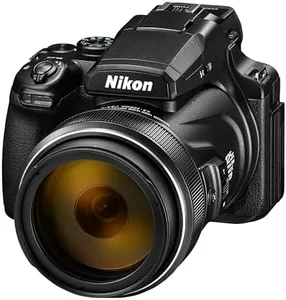
Nikon COOLPIX P1100 Superzoom Digital Camera | 125x Optical Zoom with Image Stabilization 16 MP 4K Ultra HD Video Wi-Fi Connectivity RAW Format and Rotating LCD Screen (Black)

The Nikon COOLPIX P1100 Superzoom Digital Camera stands out with its remarkable 125x optical zoom, which offers an ultra-telephoto range equivalent to 24-3000mm, making it ideal for wildlife and bird-watching enthusiasts. The dual detect optical image stabilization is a significant strength, providing sharp images even at extended zoom levels. Its 16 MP CMOS sensor and 4K Ultra HD video capabilities ensure high-quality photos and videos, while the wide range of shooting modes, including macro close-ups, slow-motion, and time-lapse, add versatility.

The rotating LCD screen and customizable control ring enhance user experience by offering flexibility in framing and adjusting settings quickly. Wi-Fi and Bluetooth connectivity streamline sharing and transferring images. However, the camera's 1/2.3-inch sensor size is relatively small, which might limit performance in low light conditions compared to larger sensors. The camera is also quite bulky and heavy at 3.1 pounds, which could be a drawback for travel.

The battery life and continuous shooting speed of 7 fps are decent but may not be sufficient for high-speed action photography. Additionally, the camera uses SD cards, which are widely available but might not be as fast as some other memory options. This camera is best suited for users looking for extreme zoom capabilities and advanced features in a compact-superzoom camera, particularly for wildlife and bird photography.

Buying Guide for the Best Compact Superzoom Cameras

When choosing a compact superzoom camera, it's important to consider your specific needs and preferences. These cameras are designed to offer a powerful zoom lens in a small, portable body, making them ideal for travel, wildlife photography, and everyday use. To find the best fit for you, you'll need to evaluate several key specifications. Understanding these specs will help you make an informed decision and ensure that the camera you choose meets your requirements.
Zoom RangeThe zoom range of a camera refers to how far the lens can magnify a subject. This is important because it determines how close you can get to your subject without physically moving. Zoom ranges are typically expressed in terms of optical zoom, such as 10x, 20x, or 40x. A higher zoom range means you can capture distant subjects more clearly. If you plan to photograph wildlife or sports, a higher zoom range (20x or more) is beneficial. For general travel and everyday use, a moderate zoom range (10x to 20x) should suffice.
Sensor SizeThe sensor size of a camera affects image quality, especially in low light conditions. Larger sensors generally produce better images with more detail and less noise. Common sensor sizes in compact superzoom cameras include 1/2.3-inch, 1-inch, and APS-C. A 1/2.3-inch sensor is standard and suitable for casual photography. A 1-inch sensor offers better image quality and is ideal for enthusiasts who want more control over their photos. APS-C sensors are larger and provide the best image quality, but they are less common in compact superzoom cameras.
Image StabilizationImage stabilization helps reduce blur caused by camera shake, especially at longer zoom ranges. This is important for achieving sharp images when shooting handheld. There are two main types: optical and digital stabilization. Optical stabilization is generally more effective and preferred. If you plan to shoot in low light or use the maximum zoom frequently, look for a camera with good optical image stabilization to ensure clear, sharp photos.
Autofocus SystemThe autofocus system determines how quickly and accurately the camera can focus on a subject. This is crucial for capturing fast-moving subjects or spontaneous moments. Autofocus systems can vary in speed and accuracy, with some cameras offering advanced features like face detection and tracking. If you often photograph action or wildlife, look for a camera with a fast and reliable autofocus system. For general use, a standard autofocus system should be sufficient.
Video CapabilitiesMany compact superzoom cameras offer video recording capabilities, which can be a valuable feature if you enjoy capturing videos. Key aspects to consider include resolution (such as Full HD or 4K), frame rates, and additional features like slow motion or time-lapse. Higher resolution and frame rates provide better video quality and smoother motion. If video is important to you, look for a camera that offers at least Full HD (1080p) resolution. For the best quality, consider a camera with 4K video capabilities.
Size and WeightOne of the main advantages of compact superzoom cameras is their portability. Size and weight are important factors to consider, especially if you plan to carry the camera with you frequently. Smaller and lighter cameras are easier to transport and handle, making them ideal for travel and everyday use. However, keep in mind that very small cameras may have smaller sensors and fewer features. Balance your need for portability with the desired image quality and features.
Battery LifeBattery life determines how long you can use the camera before needing to recharge or replace the battery. This is important for long shooting sessions or when traveling. Battery life is usually measured in the number of shots per charge. Cameras with longer battery life are more convenient and reduce the need to carry extra batteries. If you plan to use the camera for extended periods, look for a model with good battery life (at least 300 shots per charge). For occasional use, standard battery life should be adequate.
ConnectivityConnectivity options, such as Wi-Fi, Bluetooth, and NFC, allow you to easily transfer photos and videos to other devices or share them online. This can be a convenient feature for quickly sharing your work or backing up your files. If you value the ability to connect your camera to your smartphone or other devices, look for models with built-in Wi-Fi or Bluetooth. Some cameras also offer GPS for geotagging your photos, which can be useful for travel photography.

FAQ