We Use CookiesWe use cookies to enhance the security, performance, functionality and for analytical and promotional activities. By continuing to browse this site you are agreeing to our privacy policy

10 Best Canon Cameras For Beginners 2026 in the United States
How do we rank products for you?

Our technology thoroughly searches through the online shopping world, reviewing hundreds of sites. We then process and analyze this information, updating in real-time to bring you the latest top-rated products. This way, you always get the best and most current options available.

headphones-stars

Our Top Picks

#1

Winner

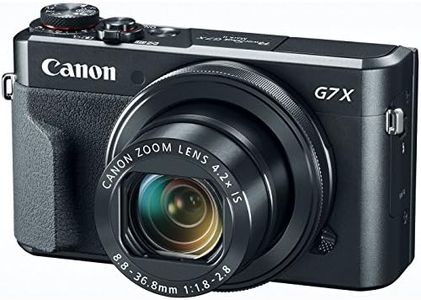
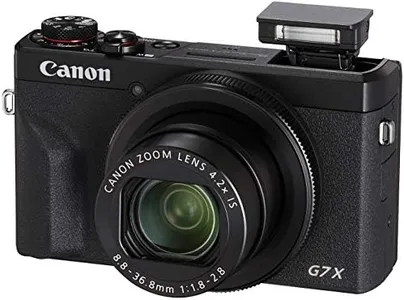
Canon PowerShot G7 X Mark III Digital Camera (Black)

Rating
10.0
Chosen by1,350
Autofocus System
Video Capabilities
Ease of Use

Most important from
996 reviews

Autofocus System
Despite concerns about autofocus and overheating, the camera performs well within its technological limits, particularly with firmware updates improving autofocus speed.
Video Capabilities
The camera's 120 FPS slow motion and 60 FPS capabilities are brilliant, though overheating can occur if used continuously.
Ease of Use
The intuitive touchscreen interface and tilting LCD provide a wonderfully clear and articulate user experience.
Battery Life
Battery life is reliable for stills and occasional video, lasting all day for moderate use and almost a week for light use.

The Canon PowerShot G7X Mark III is an excellent choice for beginners looking for a versatile and easy-to-use camera. Its 20.1-megapixel 1.0” stacked CMOS sensor and DIGIC 8 image processor deliver high-quality photos and 4K videos, making it great for both photography and videography. The 4.2x optical zoom lens with optical image stabilization ensures clear and stable shots, even when zoomed in.

The camera's autofocus system uses contrast detection, which is generally reliable but may struggle in low light or fast-moving situations. However, its wide ISO range (up to 51200) helps in capturing decent images in various lighting conditions. The camera supports 4K 30P and FHD 120P video recording, catering to users who are interested in creating videos or vlogs. It also offers the flexibility to be used as a high-quality webcam, a handy feature for live streaming or video calls.

Beginners will appreciate the ease of use, thanks to the intuitive touchscreen interface and tilting LCD, which makes framing shots and navigating menus straightforward. Additionally, the built-in Wi-Fi and NFC allow for easy sharing and transferring of images. The camera includes one lithium-ion battery, which is convenient, but users might want to consider a spare for extended shooting sessions. While the camera has a built-in flash, its effectiveness is limited by the guide number, making it less suitable for distant subjects in low light. Despite some limitations in autofocus and flash range, the Canon PowerShot G7X Mark III stands out for its image quality, compact design, and user-friendly features, making it a strong candidate for beginner photographers and vloggers.

Rating
10.0
Chosen by1,350
Autofocus System
Video Capabilities
Ease of Use

Most important from
996 reviews

Autofocus System
Despite concerns about autofocus and overheating, the camera performs well within its technological limits, particularly with firmware updates improving autofocus speed.
Video Capabilities
The camera's 120 FPS slow motion and 60 FPS capabilities are brilliant, though overheating can occur if used continuously.
Ease of Use
The intuitive touchscreen interface and tilting LCD provide a wonderfully clear and articulate user experience.
Battery Life
Battery life is reliable for stills and occasional video, lasting all day for moderate use and almost a week for light use.
#2

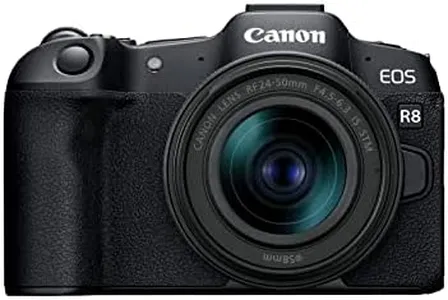
Canon EOS R8 Mirrorless Camera with RF 24-50mm f/4.5-6.3 is STM Lens

Rating
9.7
Megapixels
Sensor Size
Autofocus System

Most important from
285 reviews

Megapixels
The Canon R8's 24.2-megapixel full-frame sensor delivers stunning image quality, with rich colors and excellent low-light performance.
Sensor Size
A great entry into the full-frame camera world with fast autofocus, accurate tracking, and amazing picture quality.
Autofocus System
A great entry into the full-frame camera world with fast autofocus, accurate tracking, and amazing picture quality.
Video Capabilities
Uncropped full-frame 4K60 video and 180fps 1080p slo-mo make the R8 a powerhouse for videography.
Ease of Use
Lightweight and comfortable to hold, the R8 is perfect for extended shoots and travel.
Battery Life
Battery life is sufficient for around an hour of recording or 500 pictures, but extra batteries might be needed for long sessions.

The Canon EOS R8 Mirrorless Camera is an excellent choice for beginners stepping into the world of photography and videography. It features a 24.2 MP CMOS image sensor, which is beneficial for capturing detailed images. The full-frame sensor size provides high-quality visuals, especially in low-light conditions. Its Dual Pixel CMOS AF II system with 1,053 autofocus zones ensures precise and quick focusing, which is ideal for capturing moving subjects like people, animals, and vehicles. The camera also boasts an expanded ISO range of up to 102400, allowing versatile shooting in various lighting conditions.

The lens compatibility with Canon RF Mount lenses offers flexibility in selecting the right lens for different types of photography. Video capabilities are strong, with uncropped 4K recording at up to 60 fps, making it suitable for content creators and vloggers. The vari-angle LCD touchscreen enhances ease of use, allowing easy navigation and framing of shots. Additionally, the camera's lightweight design and built-in OLED EVF with a high refresh rate add to its user-friendly experience.

However, there are some drawbacks. The maximum aperture of F4.5-6.3 on the included lens may limit its performance in very low light conditions. Battery life, while decent, may require frequent recharging during extensive shooting sessions. The camera does not come with a remote, which could be inconvenient for some users. Despite these minor drawbacks, the Canon EOS R8 is a strong contender for beginners looking to improve their photography and videography skills with a reliable and versatile full-frame mirrorless camera.

Rating
9.7
Megapixels
Sensor Size
Autofocus System

Most important from
285 reviews

Megapixels
The Canon R8's 24.2-megapixel full-frame sensor delivers stunning image quality, with rich colors and excellent low-light performance.
Sensor Size
A great entry into the full-frame camera world with fast autofocus, accurate tracking, and amazing picture quality.
Autofocus System
A great entry into the full-frame camera world with fast autofocus, accurate tracking, and amazing picture quality.
Video Capabilities
Uncropped full-frame 4K60 video and 180fps 1080p slo-mo make the R8 a powerhouse for videography.
Ease of Use
Lightweight and comfortable to hold, the R8 is perfect for extended shoots and travel.
Battery Life
Battery life is sufficient for around an hour of recording or 500 pictures, but extra batteries might be needed for long sessions.
#3

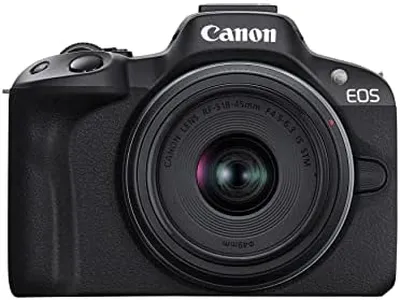
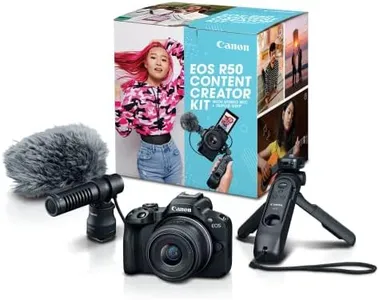
Canon EOS R50 Mirrorless Camera RF-S18-45mm F4.5-6.3 is STM Lens Kit, 24.2 Megapixel CMOS (APS-C) Sensor, 4K Video, Hybrid Camera, Photo and Video, Vlogging, Content Creator, RF Mount, Black

Rating
9.7
Autofocus System
Lens Compatibility
Video Capabilities

Most important from
1458 reviews

Autofocus System
The autofocus uses AI to automatically blur backgrounds and focus on subjects, which is perfect for close-up pictures.
Lens Compatibility
Despite initial doubts, the kit lens delivers surprisingly high-quality photos and is excellent for close-up photography.
Video Capabilities
The Canon EOS R50 is a game-changer for content creators, delivering stunning image quality and vibrant 4K video.
Ease of Use
Picture quality is amazing right off the bat, rekindling a love for photography without any stress.

The Canon EOS R50 Mirrorless Camera is a solid choice for beginners looking to explore photography and videography. It boasts a 24.2 Megapixel CMOS (APS-C) sensor, delivering high-quality images with excellent detail and clarity. The Dual Pixel CMOS AF II autofocus system covers a wide area with 651 AF zones, making it easy to capture sharp images and track subjects accurately, whether you're photographing people, animals, or vehicles.

This camera shines in low-light conditions, thanks to its advanced A+ Assist feature, which helps in difficult lighting scenarios like night or backlit scenes. For video enthusiasts and content creators, the EOS R50 offers impressive 4K video capabilities, recording at up to 30 fps, and Full-HD at up to 120 fps for slow-motion shots. The 2.36-million-dot electronic viewfinder and vari-angle touchscreen provide a flexible and clear shooting experience from various angles.

Connectivity is straightforward with built-in Bluetooth and Wi-Fi, allowing easy file transfer and remote control via the Canon Camera Connect app. One potential drawback is the lens kit, which has a maximum aperture of f/4.5-6.3, possibly limiting performance in low light without additional lighting equipment. Additionally, the lack of in-body image stabilization might require a steady hand or tripod for certain shots. However, its lightweight and compact design, combined with user-friendly features, make the Canon EOS R50 a great starting point for beginners looking to dive into both photography and videography.

Rating
9.7
Autofocus System
Lens Compatibility
Video Capabilities

Most important from
1458 reviews

Autofocus System
The autofocus uses AI to automatically blur backgrounds and focus on subjects, which is perfect for close-up pictures.
Lens Compatibility
Despite initial doubts, the kit lens delivers surprisingly high-quality photos and is excellent for close-up photography.
Video Capabilities
The Canon EOS R50 is a game-changer for content creators, delivering stunning image quality and vibrant 4K video.
Ease of Use
Picture quality is amazing right off the bat, rekindling a love for photography without any stress.

Buying Guide for the Best Canon Cameras For Beginners

Choosing the right Canon camera as a beginner can be an exciting yet overwhelming experience. The key is to understand what features and specifications are most important for your needs and how they will impact your photography. By focusing on the essential specs, you can make an informed decision that will help you grow as a photographer and enjoy the process of capturing beautiful images.
MegapixelsMegapixels refer to the resolution of the camera's sensor, which determines the amount of detail the camera can capture. Higher megapixels mean more detail, which is important if you plan to print large photos or crop images without losing quality. For beginners, a camera with 16-24 megapixels is usually sufficient, as it provides a good balance between image quality and file size. If you are just starting out and mainly sharing photos online, you don't need the highest megapixel count available.
Sensor SizeThe sensor size affects the camera's ability to capture light and detail. Larger sensors, such as APS-C or full-frame, generally produce better image quality, especially in low light conditions. For beginners, an APS-C sensor is a great choice as it offers a good balance between quality and cost. Full-frame sensors are more advanced and can be considered as you gain more experience and want to invest in higher-end equipment.
Autofocus SystemThe autofocus system determines how quickly and accurately the camera can focus on a subject. This is crucial for capturing sharp images, especially in action or low-light situations. Look for a camera with a reliable and fast autofocus system, typically with multiple focus points. For beginners, a camera with at least 9-45 autofocus points is a good starting point, as it provides flexibility and ease of use.
ISO RangeISO range indicates the camera's sensitivity to light. A wider ISO range allows you to shoot in various lighting conditions, from bright sunlight to dim indoor settings. For beginners, a camera with an ISO range of 100-6400 is usually adequate, as it covers most common shooting scenarios. As you become more experienced, you may want to explore cameras with higher ISO capabilities for more challenging lighting conditions.
Lens CompatibilityLens compatibility refers to the range of lenses that can be used with the camera. Canon cameras typically use EF or EF-S mount lenses. As a beginner, it's important to choose a camera that offers a wide variety of lenses to grow with your skills. Starting with a versatile kit lens (such as an 18-55mm) is a good idea, and you can expand your collection as you learn more about different types of photography.
Video CapabilitiesIf you are interested in shooting videos, consider the camera's video capabilities. Look for features like Full HD (1080p) or 4K resolution, frame rates, and built-in stabilization. For beginners, a camera with Full HD video recording is usually sufficient, as it provides good quality without overwhelming you with advanced settings. As you gain more experience, you can explore cameras with more advanced video features.
Ease of UseEase of use is crucial for beginners, as it can make the learning process more enjoyable. Look for a camera with a user-friendly interface, intuitive controls, and helpful features like guided modes or tutorials. A camera with a touchscreen can also be beneficial, as it simplifies navigation and settings adjustments. Choosing a camera that feels comfortable in your hands and is easy to operate will help you focus on learning and improving your photography skills.
Battery LifeBattery life determines how long you can use the camera before needing to recharge or replace the battery. For beginners, it's important to have a camera with decent battery life to avoid interruptions during shooting sessions. Look for a camera that offers at least 300-500 shots per charge, which should be sufficient for most casual photography outings. As you become more serious about photography, you may want to invest in spare batteries or a camera with longer battery life.

FAQ